
Why Do We Require A Best Software License ??
In the beginning, software developers and vendors faced challenges in protecting their intellectual property. The variety of software licensing models has grown as software development and use have expanded over the last 50 years, to meet buyer and seller needs.
To address security concerns and customer demands, software companies have developed more flexible licensing solutions outside of the perpetual license model. Usage-based licensing, or pay-per-use licensing, has become a popular licensing model among modern software makers.
What is a Software License?
Businesses use software to manage business processes, and communicate with employees, customers, and vendors, among other things. Downloading, installing, or accessing software products usually requires activating licenses or agreeing to terms and conditions.
Software licenses are contracts between the entity that creates and supplies applications, underlying source codes, or related products to end users. Licensing is a text document used to protect software developers’ intellectual property and limit their liability in case of litigation.
Software ownership vs. software licensing
It is common for people to confuse owning software with getting a license to use it. Let’s clear the air. You receive a license to use a software product when you purchase it. There may be restrictions in the license agreement, such as using the software on more than one device or creating backup copies. As a user, you are required to follow the license, terms, and conditions of some free software.
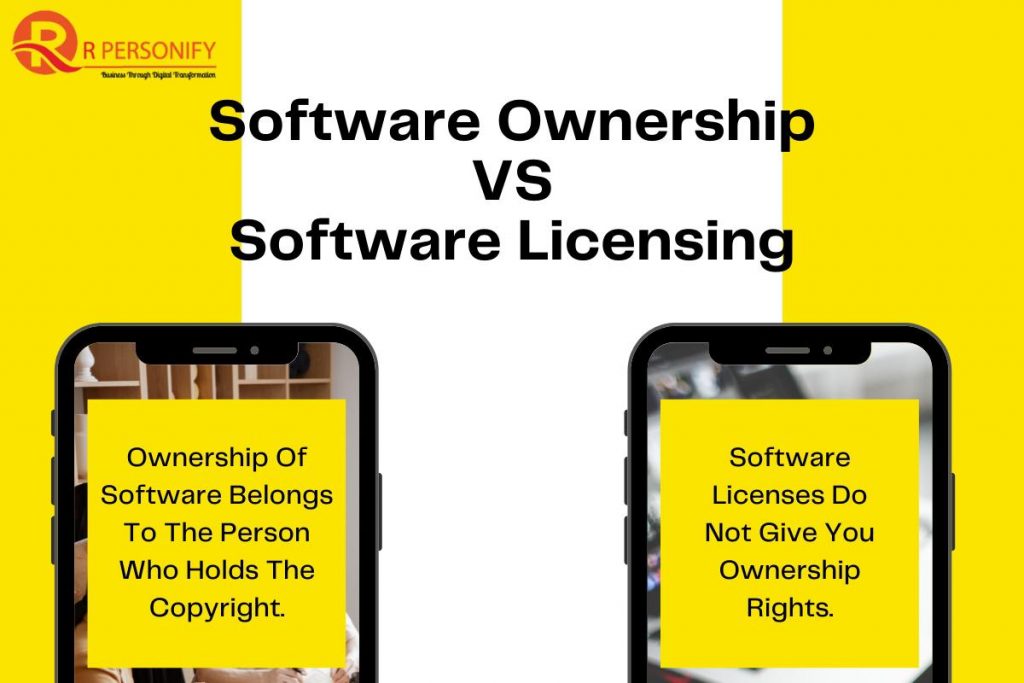
A software license does not give you ownership rights over the software. Ownership of software belongs to the person who holds the copyright. You should take the time to understand the fine print on a software license agreement since you do not own it. As software is protected by patents, failing to follow the license conditions could lead to serious penalties.
Software and copyright law
All software can be classified as either free or proprietary, and there are multiple types of software licenses available. Customer re-use rights are the main difference between the two.
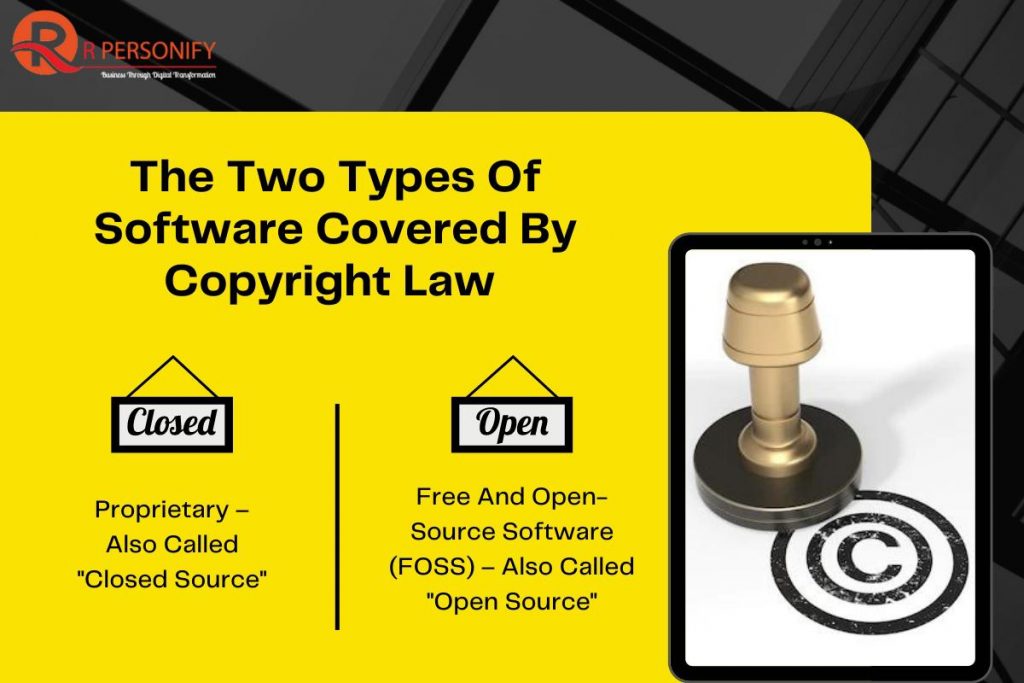
In terms of copyright law, software generally falls into one of two categories:
- Proprietary – also referred to as “closed source”
- Free and open-source software (FOSS) – referred to as “open source”
FOSS software licenses –Provide the customer with rights to modify and reuse software code, along with the actual source code. An open-source license allows users to modify software functions and inspect its code.
Proprietary software licenses –Software is normally provided with only operational code, not source code, and does not provide the authority for modifying or reusing code. The licensee of proprietary software is often prohibited from obtaining source code by reverse engineering the object code.
In the absence of a license, the software is usually categorized as follows:
- Public domain software –Non-copyrighted and freely available
- Private unlicensed software –Business applications that are still protected by copyright
There may also be additional restrictions and terms associated with open source and proprietary software licensing.
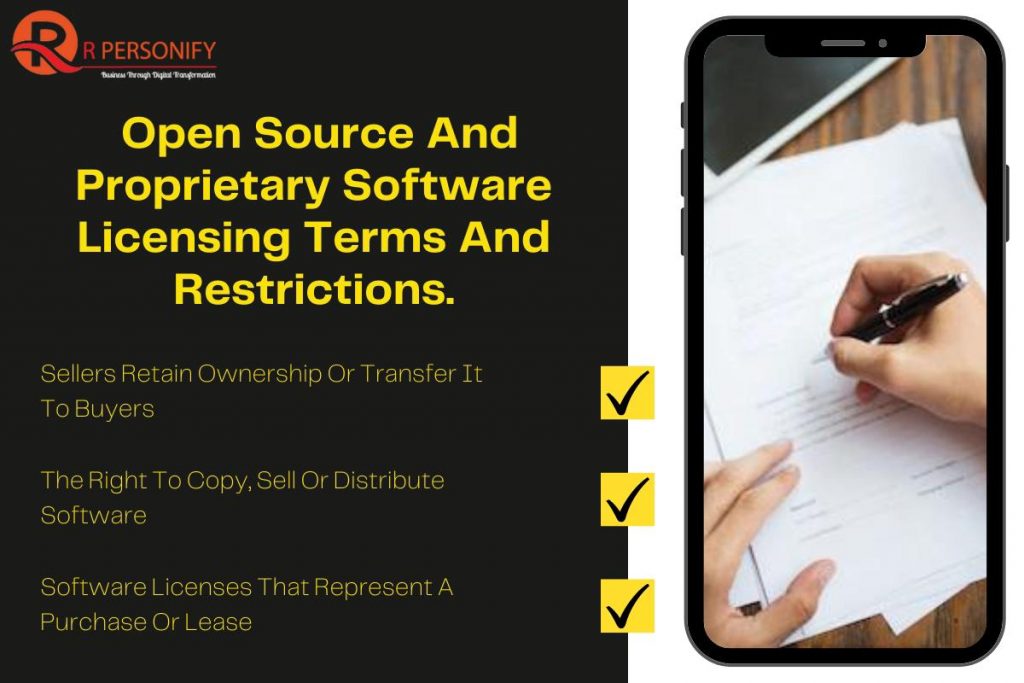
- Ownership is transferred to the buyer or retained by the seller
- A license that authorizes the copying, selling, or distribution of the software
- Whether the license represents a purchase or lease of the software
Accept the terms and conditions
Although licensing software might seem silly, it’s important to protect the publisher from having their work used illegally and to protect yourself from the consequences of infringement. Make sure you read your software license terms and conditions carefully. It’s worth your time to avoid those penalties.
How To Choose The Best Software License For Your Business?
Business software licensing decisions are mostly influenced by three factors: what you’re going to use the software for, how many people will use it, and how many computers it will be installed. The license of the software must allow your business to use it and it should not only be designed for non-profits.
You need to analyze your IT requirements whatever your industry is to keep costs down and make sure all hardware and software are long-term compatible.
Types of Licenses and What They Mean for Your Business
Software licenses come in many different types, and noncompliance can result in harsh penalties. You could be sued by the licensor if you reuse an application component without adhering to its license. Understanding these software licenses is essential before using any code, including libraries and frameworks, that you didn’t create yourself. Take a look at our list of the top open source licenses as well as their potential legal pitfalls.

You should know about these 10 types of software license models.
- Public domain
Among the various types of software licenses, this is the most permissive. Public domain software can be modified and used by anyone without any restrictions. If you are adding it to your own codebase, you should always ensure that it is secure. It is important to note that code without an explicit license is not automatically in the public domain. You can also use code snippets you find online.
- Permissive
The permissive license is also known as an “Apache-style” or “BSD style” license. They include minimal restrictions on how the software may be modified or redistributed. Open source and free software commonly use this type of license. Another common variant is the MIT License, in addition to the Apache License and BSD License.
- LGPL
You can link to open source libraries in your software under the GNU Lesser General Public License. The LGPL-licensed library can be compiled or linked with your own code to create an application that can be released under any license you want, even a proprietary one. In any case, if you modify or incorporate parts of the library into your code, you will have to comply with LGPL license terms in your application.
- Copyleft
A copyleft license can also be called a reciprocal license or a restrictive license. There are many examples of copyleft or reciprocal licenses, but the GPL is the most well-known. Licenses like these allow you to modify the code and distribute new works based on it as long as you apply the same software license to any new works or adaptations. Components, for example, may have licenses that allow them to be used and distributed only for personal purposes. As a result, any derivatives you create are also restricted to personal use.
It’s important to note that users of your software will also be allowed to modify the code. As a result, you would be required to make the source code available. Your best interest may not be served by exposing your source code.
- Proprietary
There is no doubt that this is the most restrictive of all types of software licenses. All rights are reserved, according to the concept. In general, it’s used to protect proprietary software that may not be modified or redistributed.
- Cloud-Based
Using cloud licensing provides a user-centric option, allowing access from anywhere and at any time. Subscription licenses are the most common cloud-based software license model. Salesforce.com is an example of a successful cloud licensing solution. It is best to build a cloud-based license using an existing on-site licensing platform or to build a new one. It is less recommended to move a non-cloud license to a cloud-based one.
- Concurrent Licensing
You may be looking for an easy way to purchase multiple licenses for your employees if you’re a business owner. Businesses can purchase bulk licenses with concurrent licensing without wasting time or money. Companies can manage their software licenses more easily with concurrent licensing, which allows multiple users to share one licensing code.
Subscription License
A subscription-based license gives users access to a software product for a set period of time, either monthly or annually.
In order to provide superior customer service, most tech companies are switching to subscription-based business models. In this case, the end-user licenses the software on a recurring basis, such as a monthly or annual subscription.
Network Licensing
Enterprise organizations with more than 1000 employees commonly use network licenses. All users and devices connected to a network are entitled to access the software through network licensing. There may be an unlimited number of users using a network license, or there may be a concurrent licensing model that limits how many users may be on the network at any one time.
Licensing based on meters or consumption
It is a type of software license in which the vendor charges based on the number of times the user accesses certain application features, data, or other resources.
Based on how their customers use the software, vendors can charge their customers according to factors such as the amount of time they spent using the program, the number of database queries they processed, or the amount of CPU time they consumed.
There are some IT organizations that dislike metered licensing because the cost of the software rises as the business becomes more dependent on it. Some users may like metered licensing because it offers flexibility and tethers the total cost of ownership to actual usage, reducing waste and tying costs to actual usage.
SOFTWARE LICENSING AND HOW IT AFFECTS BUSINESSES
Your business can also save money by understanding software licensing and purchasing the right licenses. If you want your company’s employees to use the software, you would have to buy multiple copies, which can be costly, since most off-the-shelf software packages are single-user only. Different types of licenses, such as multi-user licenses or site licenses, can save you a lot of money.
Why is a software licensing important?
There are some businesses that don’t understand software licenses or ignore them, which can cause serious problems. The cost of computer software is high, and some companies believe they can ignore the license terms, such as installing software on multiple computers when the license is for a single user. The use of software that does not conform to the license terms should be considered piracy and might lead to prosecution.

Here are some reasons why your business should use licensed software:
1. It Is Illegal To Use Unlicensed Software
Understanding the laws surrounding software is important before using or purchasing it. In order to use computer software, you or your business must have a software license. Failure to do so can land you or your business in trouble with the law. Therefore, all software should be legally licensed before being used.
Despite the complexity of software licenses, you should read them carefully to learn their rights and obligations. Most software licenses are one-user only, and if more than one person is found to be using the same software, the license can be revoked and your account may be deactivated.
2. Licensed software offers better cybersecurity protection
A business needs licensed software for smooth functioning in order to save money and time. Cyber threats can cause significant damage and losses to your business. Further, the time it takes to solve the problems will also slow down your business.
As saving time and money is a priority for all businesses, it’s always a good idea to ensure your business is covered wherever possible. In addition to saving on both, software licensing ensures better protection and efficiency in your business’s daily operations.
Conclusion
Free tools and software are often used by business owners to save on costs, but when you step back and consider the future costs, they aren’t worth it. In order to use software legally for your business, you must license it. Any other roundabout method will only cause you problems.
If you are part of an organization or business then it can help to have a policy on software licensing and discourage the use of unlicensed software in writing. Being smart about software licensing can put you in a position to be successful and can save you a lot of headaches in the long run.
Recent Comments