
During the past year, organizations dispersed widely, which accelerated low- and no-code development, according to KPMG. Over the last two years, Gartner predicts that more than half of medium to large companies will have adopted low- and no-code application platforms. The number of executives identifying low- and no-code development platforms as their most important investment nearly tripled following the COVID-19 crisis.
ServiceNow has achieved the position of top-ranking low-code platform in this evaluation. ServiceNow is most famous for its IT service management solutions but has devoted considerable resources to its low-coding tooling and workflow platform messaging.
What is a Low-Code Application Platform?
A low-code platform is an application that enables users to create their own applications without coding. Instead of extensive coding languages, low-code platforms offer visual interfaces and simple logic. ServiceNow has been named a Leader in Gartner’s Magic Quadrant for Enterprise Low-Code Application Platforms for the year 2020

So, Let me tell you what is exactly a low-code application platform. A user with no formal knowledge of coding or software development can easily develop apps for various purposes, including mobile apps and business apps. These platforms have become increasingly popular as a faster and cheaper alternative to traditional software development. Professional developers and non-professional developers can develop apps using a low-code platform to meet business needs, automate processes, and accelerate digital transformation. This type of software can be used in various domains, such as healthcare, education, retail, manufacturing, and social media.
What is the difference between low-code and no-code?
Often people get confused between Low-code and no-code but they are not the same thing. No-code and low-code solutions both simplify the development of apps, but the differences should be considered.

Low-code
Low-code platforms are created for non-technical business users and professional developers. In order to streamline the development process, they utilize visual-based modeling and require little training. Furthermore, those with coding experience may dive deeper and code on their own as needed.
No-code
The no-code platforms are designed for business users and citizens who do not have any development experience. Compared to traditional app development methods, no-code solutions allow anyone to create apps but can lead to shadow IT-unauthorized app development within an organization.
ServiceNow Platform App Engine allows non-technical people or citizen developers to create applications with minimal or no programming effort. Since Now Platform App Engine is pre-built, developers don’t have to write code from scratch, but can instead rely on pre-built components to speed development, build desktop and mobile applications, and automate and digitize workflows.
The following solutions are included in ServiceNow Creator Workflows:
- App Engine: Create low-code workflow apps fast with App Engine.
- Integration Hub: Automate workflow-based processes and connect your business systems faster.
Why Should You Consider Building a Low-Code Application?
As a low-code application platform, the ServiceNow App Engine is fundamentally changing the way software applications are developed and delivered. In the past, enterprise applications followed a traditional software development cycle that lasted for several months, sometimes even years. Businesses demand that new applications be built & delivered within a matter of weeks in today’s fast-paced environment.
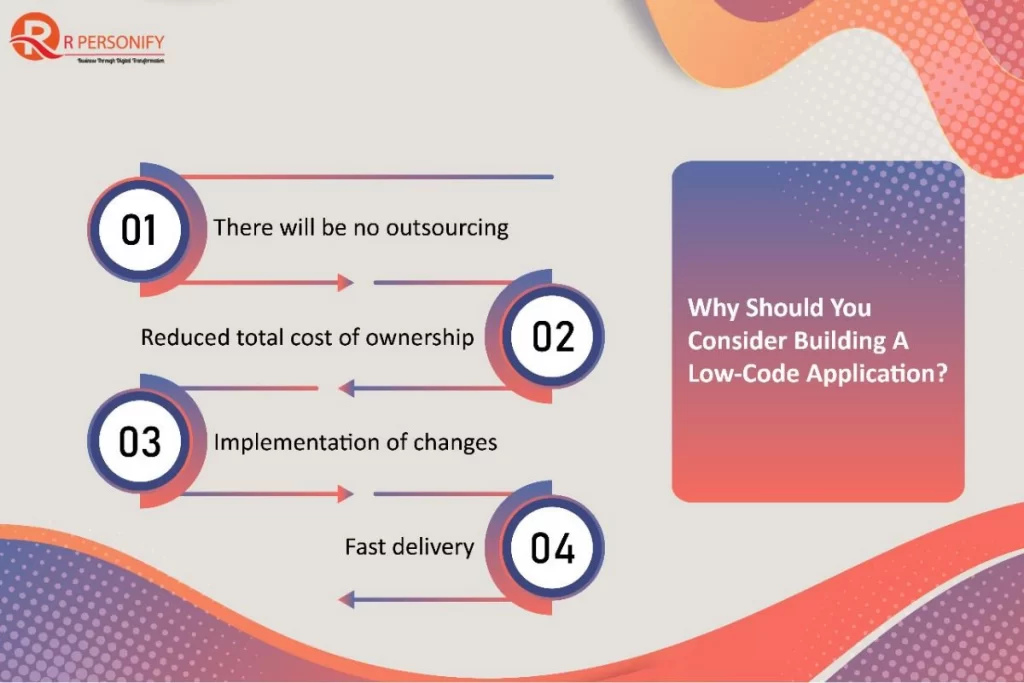
Here are four reasons why you should consider a low-code platform for your next project.
1 – There will be no outsourcing
Due to a lack of skills, time, and cost, enterprises outsource software development projects to external companies. Low-code platforms can help enterprises leverage their internal resources. Low-code platforms offer drag-and-drop tools for beginners as well as experienced users.
2 – Fast delivery
Low-code applications can be developed rapidly, which drastically reduces development time compared to traditional methods.
3 – Implementation of Changes
How often have we seen business requirements change midway through a project? Making changes to your application or enhancing specific functionality is no longer an issue with low-code platforms. IT teams and business users can do it themselves with minimal disruption to business operations.
4 – Reduced total cost of ownership
Reduced development time and effort reduce ownership costs. A lightweight platform such as R personify simplifies the process of developing applications using the ServiceNow low-code Platform, which reduces infrastructure and maintenance costs significantly.
How does ServiceNow help you to build your low-code applications?
Here are five steps to building a low-code application
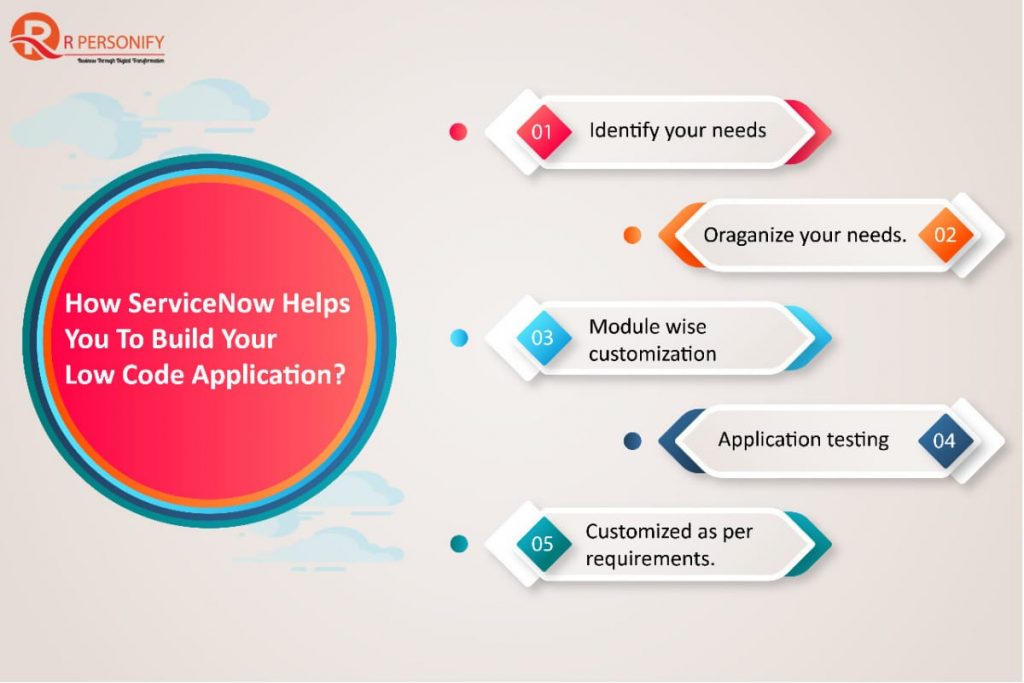
- Identify your needs. Rather than creating a sales management platform, we need to determine what the real needs are: customer development, sales conversion rates, or sales analysis and trends.
- Organize your needs.
- Module wise Customization
- The testing process.
- Customized as per Requirements
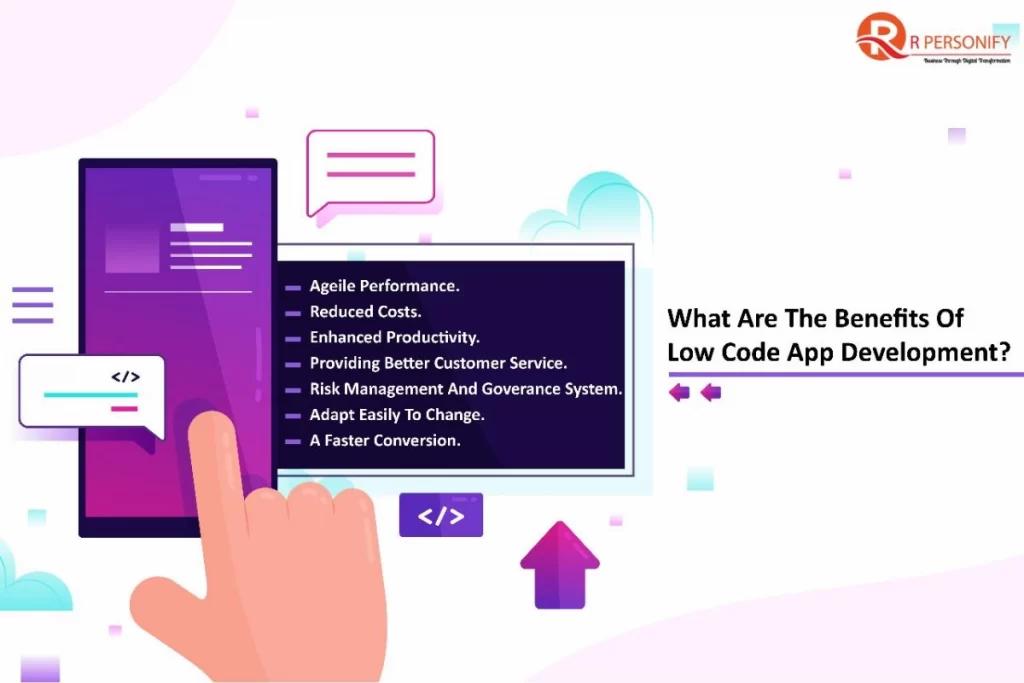
What are the Benefits of Low Code App Development?
Low-code app development is a new trend for app developers. They can use it to create apps faster and with less work.
- Agile performance
- Reduced costs
- Enhanced productivity
- Providing better customer service.
- Effective risk management and governance system.
- Adapt easily to change.
- A faster conversion.
Agile performance
Digital speed means building apps that are able to function seamlessly across multiple devices. Access to data, collaboration tools, and apps should be available from mobile devices and desktops alike.
Reduced costs
As a result of being able to build more apps in less time, costs decrease. However, that isn’t the only factor. Low-code development reduces hiring costs by reducing the need for more developers. It can also make everyone in the organization more productive, not just IT…
Enhanced productivity
Due to low-code application development, more apps can be created in less time, what used to take months now takes just days. Time is no longer an obstacle to real innovation when low-code development is used.
Providing better customer service
The IT organization is not the only one affected by low-code development. Customer satisfaction is also improved as a result of increased speed. Companies can quickly respond to market changes or customer needs with low-code development.
An effective risk management and governance system
In a world where regulations are constantly changing, not to mention their global reach, how can your organization stay current? Using low-code development, you can meet regulatory requirements and stay on top of deadlines.
Adapt easily to change
It is easy to change apps—adapt them to suit new requirements—using low-code development. As low-code development does not require complex coding, it enables immediate changes when needed.
A faster conversion
We live in a digital age that requires a transformation. Business applications built with low code are easy to build and simple to maintain. The result is that the process runs more smoothly.
Low-code benefits enable organizations to adapt to changing business conditions more quickly and respond to them faster.
What are the Common Features of Low-Code Development Platforms?
Flexibility: Developers can edit or write custom software code with low-code development platforms, as opposed to no-code platforms, which only provide drag-and-drop development tools. Companies are able to write code and adjust it when necessary while still benefiting from the low-code platforms’ streamlined development tools and automation.
Development without code: Low-code development platforms allow users to develop applications without writing code. With these tools, admins with little or no code experience can build relevant applications that automate workflows and business processes. No-code development options provide experienced coders with a streamlined development process with little coding required to achieve desired results.
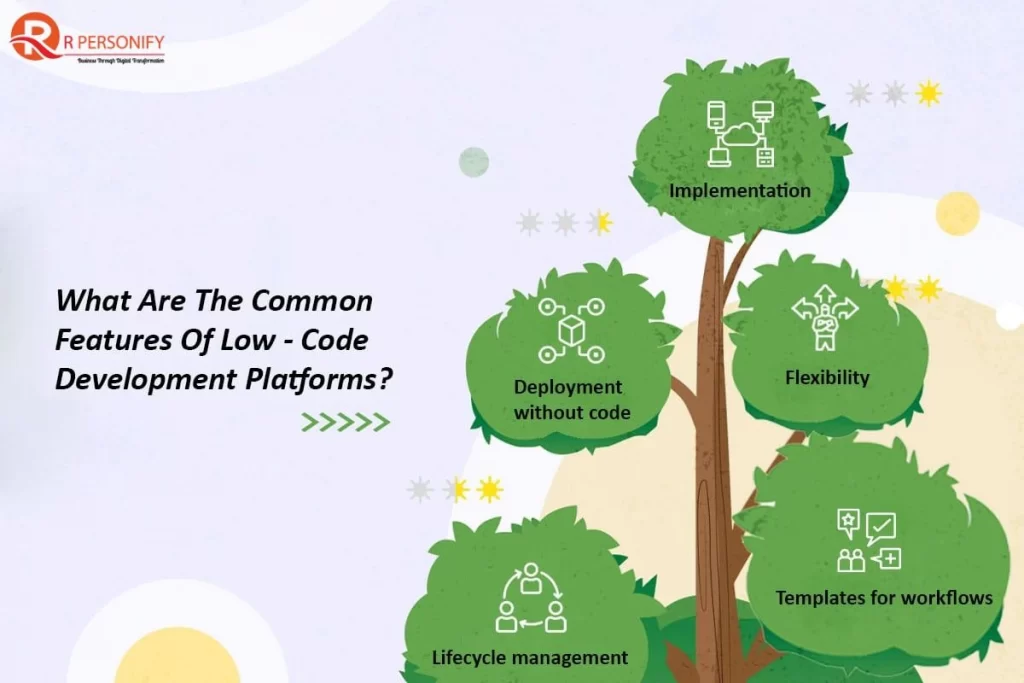
Templates for workflows: There are numerous low-code development platforms that provide pre-built workflow templates that users can easily modify to fit their specific requirements. Since low-code development platforms are often used to create automated workflows, this feature speeds up and streamlines the process.
Implementation: Users can build and deploy their developed applications on the cloud using low-code development platforms. All of this data is housed in one central hub, which simplifies workflow by expediting development.
Lifecycle management: Low-code development platforms help users control every aspect of their applications, from planning to building, testing, and deploying. Developers can employ DevOps seamlessly by incorporating continuous integration and delivery (CI/CD) as part of their application lifecycle management.
Examples of Low Code Applications & Case Studies
Here are some low-code and no-code examples:
Salesforce
A platform for all businesses
Salesforce has a history of offering low-code and no-code solutions targeted exclusively at non-technical business users. As part of the Salesforce Platform, customers can now develop business-side applications using Salesforce Lightning, Force.com, and Salesforce App Cloud Platform. Developers can publish their apps to the Apple and Google app stores using Mobile Publisher.
In 2008, Salesforce introduced its Force.com platform, which enables third-party application development for the platform. Users can create and automate digital workflows with tools like Flow Builder. The tool allows users to select and reuse components and services. Also, there is an active community of app builders with good support from the company.
Microsoft Power Apps
Using Microsoft Power Apps, the company’s development platform designed for building rich web and mobile applications, users can easily create rich web and mobile applications. Developed on Microsoft’s Common Data Service, the solution connects to various online and on-premises data sources. The solution is tightly integrated with Microsoft’s range of products (SharePoint, Microsoft 365, Dynamics 365, SQL Server) and connects to the underlying platform (Microsoft Dataverse). The PowerApps Studio tool allows you to build canvas apps during development. The goal of Microsoft’s app-building tool is to make the experience similar to building a slide deck in PowerPoint.
ServiceNow
All ServiceNow apps and infrastructure are built on the Now Platform, which is available to developers of any level. As an IT operations management and services platform, ServiceNow offers a turnkey application structure that enables development for varied business functions. Additionally, the vendor offers a Guided Application Creator for non-technical business users in order to assist them in creating applications on the Now Platform. Apps can be created that enhance the user experience, employee experience, or mobile experience. ServiceNow’s IntegrationHub, designed to support pre-built connectors, is a no-code integration platform.
Servicenow is Leading the Low Code Ecosystem into the Future
ServiceNow, a company that makes work, work better for people, has been named a Leader in the 2021 Gartner Magic Quadrant for Enterprise LowCode Application Platforms. It has been recognized as a Leader for low code platforms for the second consecutive year.
With ServiceNow Creator Workflows, the Now Platform empowers every employee to innovate at scale with easy-to-use low-code tools for creating workflow applications. The Creator Workflows platform helps businesses at every level deploy apps that deliver tangible business outcomes at speed, from departmental apps to cross-enterprise workflows.
The ServiceNow App engine is a tool for developers of all levels to build applications. ServiceNow App Engine empowers businesses through intuitive, intelligent, and enterprise-class low-code application delivery. Using App Engine’s low-code/no-code tools and processes, citizen developers, as well as seasoned full-stack developers can build high-quality consumer applications without the complications and long development cycles associated with traditional development methods.
Who Should Buy a Low-Code Development Platform?
Businesses that wish to innovate their digital portfolios and optimize their workflows can take advantage of low-code development platforms. Using these tools, an organization is able to break down its silos for better collaboration between teams, while simultaneously increasing productivity through continuous iteration at a competitive pace.
How to Choose the Best Platform for Your Business Needs?
In the process of software development, various low-code platforms offer different capabilities and approaches. Some platforms are easier to learn than others, while others emphasize integrating features more effectively. Moreover, low-code platforms are more customizable.
Therefore, it is important to determine what your business needs are and to plan your development journey with the tool that best fits them. Also, consider how much development work you want to delegate to your citizen developers.
Conclusion
These days, everyone is using the ServiceNow App Engine. It makes sense, doesn’t it? Building apps with low code is faster and more effective. According to some experts, low-code software development is the future of business agility. The technique allows you to modify internal software solutions, allowing non-coders to fill workflow gaps with simplified visual techniques. Businesses of all sizes can benefit from low-code platforms, whether it is for CRM enhancements or BPM automation. Among the many advantages of low-code, platforms are their ease of use, drag-and-drop functionality, ease of prototyping, and low cost of entry.
Now App Engine allows companies to build digital solutions faster and more affordably while conforming to modern security and scalability regulations. ServiceNow Creator Workflows, built on the Now Platform, enables employees to create workflow applications easily with low-code tools.



Recent Comments