
This article discusses 12 lessons in IT that we can learn from 2022, including automation, cybersecurity, and artificial intelligence. We will examine how organizations responded to the pandemic and how it affected them. Our IT leaders shared their reflections on what the previous 12 months have taught them. Here are their thoughts.
What is an IT lesson?
The IT lesson demonstrates that information technology (IT) is an essential tool in many day-to-day activities as well as in specialized personal and business applications.
Top 12 IT lessons to take forward from 2022
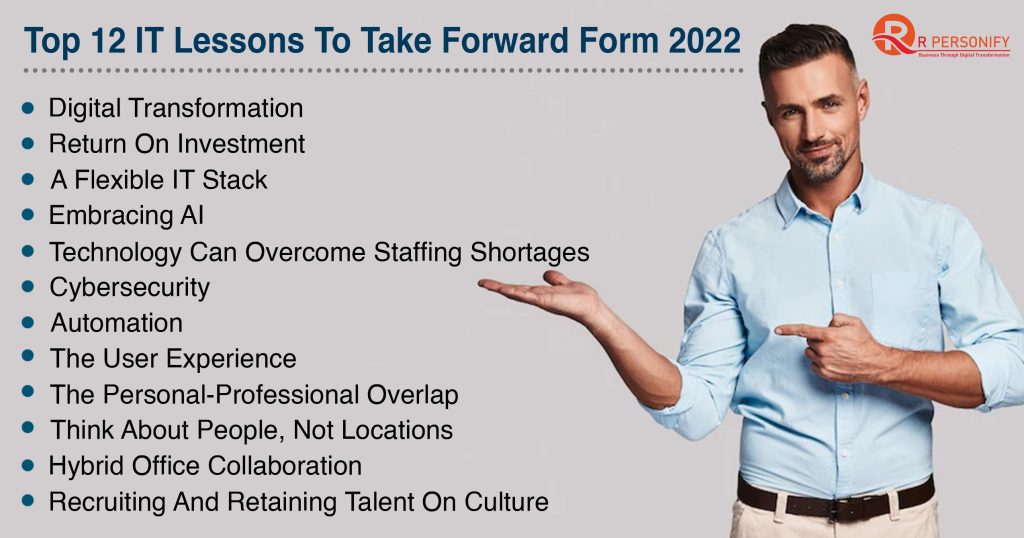
1. An Explosion Of Digital Transformation
Using digital technologies to transform business processes, cultures, and customer experiences is known as digital transformation. Businesses had been discussing it for years, but the pandemic has heightened the urgency.
To meet the growing digital needs of today’s consumers, many businesses have completely or partially digitized their existing infrastructure to meet this trend. More and more businesses have invested in digitization to stay competitive or even survive in the face of the over-a-year-long COVID-19 pandemic and the accompanying social distancing protocols. Unlike digitized businesses, non-digitized businesses had difficulty meeting these demands and protecting their revenue. As a result of the financial fallout, these businesses began investing more in digitally transforming their infrastructure
2. Return On Investment Has To Be Faster
ROI plays an undeniable role in digital transformation. This index can help businesses understand how efficiently their investments and capital are used to boost transformation activities. When a business achieves a high ROI, its investment strategy is clear and on track.
3. A Flexible IT stack
Often, IT systems have to be modified to adapt to business transformation and IT transformation events like restructuring and data harmonization. A digital transformation project can be complicated, whether it is migrating to a new ERP system, integrating business applications and data after a merger, or carving out business units after a divestiture. In a complex project, issues are likely to pop up, so flexibility is essential to achieving goals during business and technical transformations.
IT flexibility is always a good idea, regardless of whether you anticipate any business transformations in the near future, are preparing for an IT transformation event, or have just completed one. It’s likely that there will be a transformation event soon in today’s rapidly changing world. Be sure that you have the flexibility, automation, simplicity, and trusted partner you need when crafting a transformation strategy.
4. Modern Society Is Embracing AI
Globally, the artificial intelligence market is predicted to reach USD 93.5 billion by 2030 and grow by 38.1% CAGR over the period. In industries such as automotive, healthcare, retail, finance, and manufacturing, advanced technologies are being adopted through continuous research and innovation directed by the tech giants. While technology has always been an integral part of these industries, artificial intelligence has made it the center of the organization.
Digital transformation largely relies on artificial intelligence (AI), including machine learning (ML), deep learning, natural language processing (NLP), and predictive analytics. With the help of each of these technologies, our enterprise systems are able to analyze our data, anticipate our futures, automate routine tasks, and remind us of the most important tasks.
A recent survey found that 50% of businesses had adopted AI in at least one of their business functions, and 75% of respondents said they planned to digitally transform their operations by 2025.
5. Cybersecurity
Digital transformation includes integrating automation, AI, machine learning, and the Internet of Things (IoT) into the workplace. In addition, it also contributes to adding to the complexity and challenges of the cybersecurity environment. Embracing digital transformation has become a priority for businesses, but how can they ensure they remain secure in the face of complex cyber threats?
In 2020, this accelerated rapidly as a result of the pandemic. In most parts of the world, people now work from home, and they rarely interact face-to-face. Organizations were forced to offer almost entirely digital experiences almost immediately. However, companies need to consider the additional cybersecurity challenges posed by digitization.
It is not mandatory for organizations to complete their digital transformation by a certain date. However, the clock is ticking, and many organizations are aiming to complete the journey by 2025. Digital transformation cannot be undertaken if the period has been plagued by constant cyberattacks and data breaches – organizations must remain safe while undergoing digital transformation.
6. Staffing Shortages Must Be Overcome By Technology
In the last decade, the demand for skilled workers has increased significantly. This is because of the rapid growth in technology and its impact on society. The need for professionals with STEM skills has been on a rise as well. These positions, however, cannot be filled due to a lack of applicants.
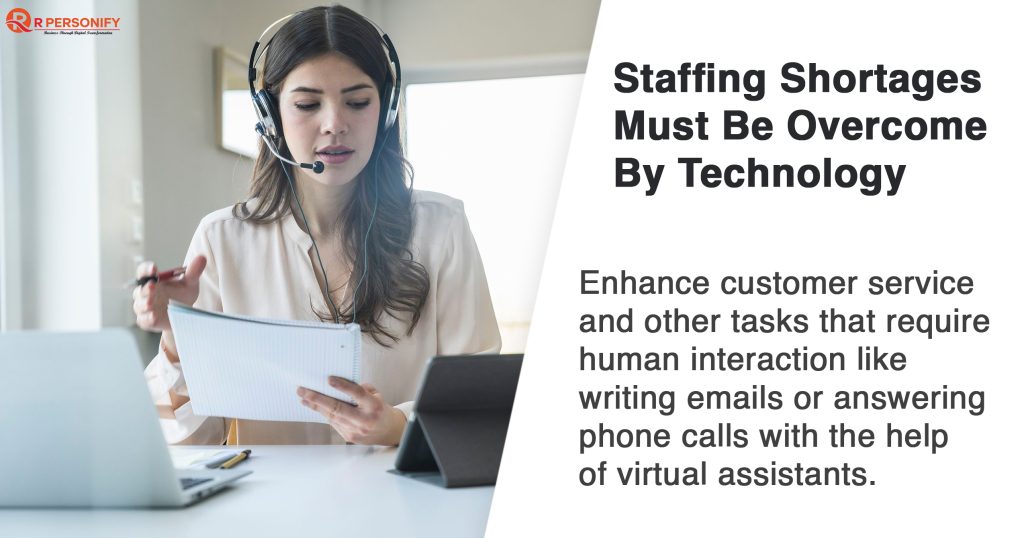
In order to overcome this problem, technology helps by providing innovative solutions. Data entry or data processing are some examples of repetitive tasks that can be automated using it. Virtual assistants can also be created to help with customer service and other tasks that require human interaction, such as answering the phone or writing emails.
If technology is not used to overcome staff shortages, it will lead to a lot of problems, including high turnover rates, low productivity levels, and a shortage of qualified professionals required for new innovations in science and engineering, which could result in a higher rate of unemployment than it already is.
As machines become more capable, they will be able to perform more tasks than humans can, complement those tasks, and even perform some tasks that are beyond their capabilities. There will be declines in some occupations, growth in others, and changes in many more.
7. Automation
We are entering an era of automation. Business operations around the world are already supported by automation. In fact, business process automation offers countless benefits across the business and its varied teams and tasks as technology advances. Your processes, your people, and your profits will benefit from it
Automation and artificial intelligence are not brand-new concepts, but recent technological advancements are expanding their capabilities. According to our research, these improvements will benefit businesses, contribute to economic growth, and make progress on some of society’s most difficult problems.
Business is being transformed by automation and artificial intelligence, and these technologies will contribute greatly to economic growth. The rise of automation and artificial intelligence is changing the nature of work and the workplace, creating challenges as well as opportunities. Some occupations will decline, others will grow, and many more will undergo transformations as society faces significant transitions
8. The User Experience Is A Competitive Advantage
In order to achieve a successful conversion, businesses must consider the user experience critically, which has the ability to help them think critically about how their customers interact with their brand. User experience (UX) is part of the customer experience – it’s what forms the foundation of your customer’s experience.
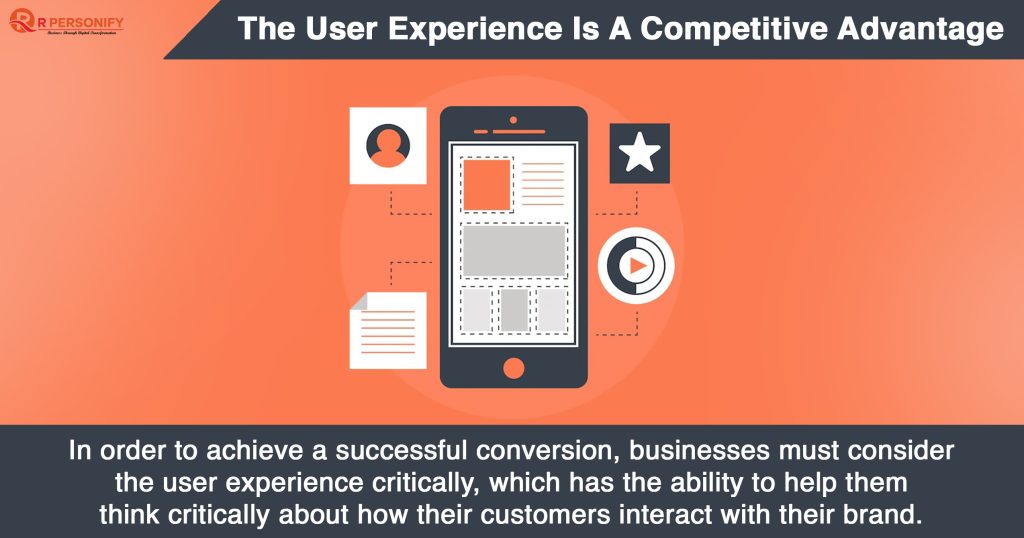
An effective user experience not only helps users feel recognized and understood but can also transform a company radically. By embracing UX best practices, companies can rethink their roles and relationships with customers. Thus, it impacts the business’s infrastructure.
When designed thoughtfully, the UX can create a competitive advantage for your company. Products and services can be improved upon by competitors, but the user experience is the only thing that rests firmly under your control. That Makes it a valuable, worthwhile investment that you can’t afford to overlook in your quest to remain relevant and competitive. Embrace UX and the human element as the world races towards a digital reality. It’s the only way forward.
9. Overlapping The Personal And Professional Life
Work-life balance is a term used to describe how workers distribute their time between professional and personal obligations. When someone has a good work-life balance, they’re able to allocate their time so they don’t overwork and can focus on other aspects of their life like family, friends, hobbies, or social activities.
One of the biggest perks of remote work is greater flexibility. With the ability to work remotely, employees can take advantage of this by working from home and creating a flexible schedule to take care of work and personal responsibilities.
10. Think About People, Not Locations
Hybrid work isn’t just about location. It’s also about people, culture, safety, security, and unlocking new opportunities. To make hybrid work a reality, companies need technology that’s adaptable and flexible for any role, working style, device, and geography. You need solutions that bring the best of remote work and in-person work together so everyone has an equal voice. While settling for “good enough” collaboration solutions might have helped you deal with remote work before 2022, you can’t settle for a lower quality, fragmented, insecure collaboration experience in this hybrid world. The time to act is now.
11. Hybrid Office Collaboration
As we begin to emerge from the global pandemic, one thing is for certain—the way we work has forever changed. This is the era of hybrid work.
Hybrid work is a flexible work model that supports a blend of in-office, remote, and on-the-go workers. It offers employees the autonomy to choose to work wherever and however they are most productive. We’ve been on the cusp of the shift to hybrid work for more than a year, with false starts attributed to a pandemic that had other ideas. Now, we’re at a long-awaited inflection point: the lived experience of hybrid work.
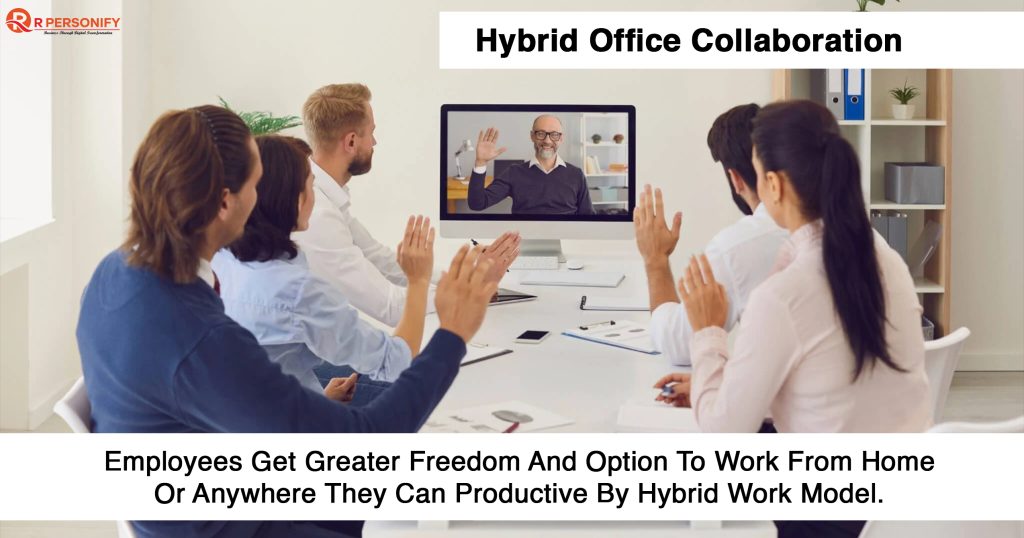
Hybrid work is a people-first approach to managing the workforce that drives increased productivity and job satisfaction while addressing the major challenges of remote work, such as isolation and lack of community. A hybrid work model provides employees with greater flexibility and the option to work from home or anywhere they can be productive. With hybrid work, the workplace is no longer inside the four walls of the corporate office—it’s an ecosystem of employees working from home, in coworking spaces, and in the office. Team members can migrate between various locations depending on the work they need to get done.
The shift to hybrid work brings considerable benefits to employees, businesses, and the environment. It promises to deliver increased flexibility, productivity, and job satisfaction for employees. For the business, it improves the bottom line and expands the talent pool. And the reduction in travel and office spaces leads to a more sustainable future.
12. Recruiting And Retaining Tech Talent Depends On The Culture
People expect more from their employers today, and organizations that want to hire the best people need to go further than competitive pay. They need to create a company culture that supports employee well-being, including physical, financial, and mental health.
It can be difficult to define exactly what the ‘culture’ of an organization is, but broadly it can be described as ‘the way we do business’. This includes the values that affect the work environment, management, company communications, workplace practices, and much more.
These are all IT lessons to be learned from 2022 that can help businesses stay ahead of market trends, changing economic forecasts, and talent needs.
The pandemic and recent technological advancements have sparked the latest technology trends. As artificial intelligence improves, more and more machines and applications are powered by it. Cybersecurity is a steadily busy field.



Recent Comments