More than 100 years have passed since ERP was created. A paper-based manufacturing system called economic order quantity (EOQ) was developed in 1913 by engineer Ford Whitman Harris. EOQ was the industry standard for decades. When the toolmaker Black and Decker became the first company to integrate EOQ concepts with a mainframe computer in 1964, it changed the game.
Manufacturing resource planning (called MRP II) replaced MRP as the standard in manufacturing. The core manufacturing components of MRP II were modules: purchasing, bills of materials, scheduling, and contract management. First-time integration of different manufacturing tasks has been accomplished. MRP II offered organizations other compelling examples of how organizations could optimize operations and boost operational efficiency through better production planning, reduced inventory, and reduced waste (scrap). In the 1970s and 1980s, MRP II incorporated finance, customer relationship management, and human resources data as an extension of manufacturing. Business management software had a name by 1990—enterprise resource planning. In this article, we will explore the benefits of Oracle’s ERP Cloud.
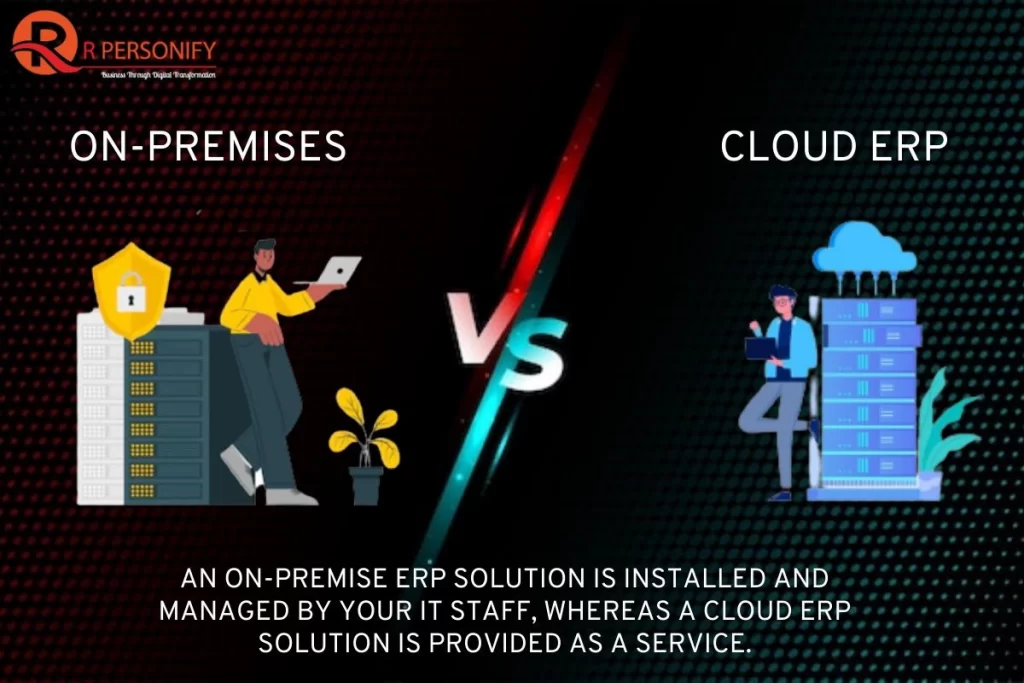
Cloud and on-premises ERP deployment models
ERP adoption grew rapidly during the 1990s and the beginning of the 21st century. In parallel, ERP system implementation costs began to rise. For the software to run, big machines were usually found in a server room, typically on company premises. Both hardware and software licenses require capital investments that depreciate over a five to ten-year period. Furthermore, organizations often want to customize their ERP systems to fit their specific needs, resulting in additional expenditures such as software consultants and training.
At the same time, ERP technology was evolving to include new features, such as embedded analytics. Over time, organizations found that their on-premises ERP systems were unable to cope with modern security demands or emerging technologies such as smartphones.
Implementing ERP in the cloud: A new delivery model
Introducing cloud-based ERP, specifically software-as-a-service (SaaS)… A company’s ERP software runs on a remote server network instead of inside its own server room when it’s delivered as a cloud service. Cloud providers manage, patch, and update software several times a year, not every 5 to 10 years as they do with on-premise systems. Since the cloud eliminates the need for companies to purchase software and hardware, or hire additional IT staff, it can reduce both operational and capital expenses. As a result, the organization can invest its resources in new business opportunities, and its ERP software is up-to-date at all times. Instead of managing IT, employees can focus on more value-added tasks such as innovation and growth. The benefits of Oracle ERP Cloud can help organizations increase productivity and make better decisions.
Based on Oracle Fusion Applications, Oracle Cloud ERP offers a cloud-based ERP service that implements Oracle Fusion Architecture and Oracle Fusion Middleware. A suite of Oracle Cloud ERP applications was announced by Larry Ellison, Oracle’s CEO and CTO, in June 2012 as part of Oracle Cloud, the company’s cloud-based applications suite. Oracle Cloud ERP was announced as a preview at Oracle OpenWorld 2012. The company reported 1,300 Oracle ERP Cloud customers in October 2015. It released Release 13 on August 2, 2017.
Introduction to Oracle ERP Solutions
Tomorrow’s leaders are those most capable of adapting to change today. Oracle Fusion Cloud ERP is a complete, modern, cloud ERP suite that provides your teams with advanced capabilities, such as AI to automate the manual processes that slow them down, analytics to react to market shifts in real-time, and automatic updates to stay current and gain a competitive advantage.
Why Should You Consider Oracle’s ERP Cloud Solutions for Your Business?
In today’s business world, ERP is unavoidable. By integrating enterprise data and processes into ERP systems, businesses can align departments and streamline workflows, resulting in huge savings. Here are a few examples:
A better understanding of the business- based on real-time information
Reduced operating costs- based on streamlined business processes
Improved collaboration- Data shared by users in contracts, requisitions, and purchase orders
Enhanced efficiency – Business functions and processes are well-defined to provide a unified user experience
Consistently designed infrastructure- Business activities are conducted the same way from back to front
Improved adoption by users -because of a similar user experience
lowered risk –through improved data integrity and financial controls
improved management and operational efficiency –through uniform and integrated systems
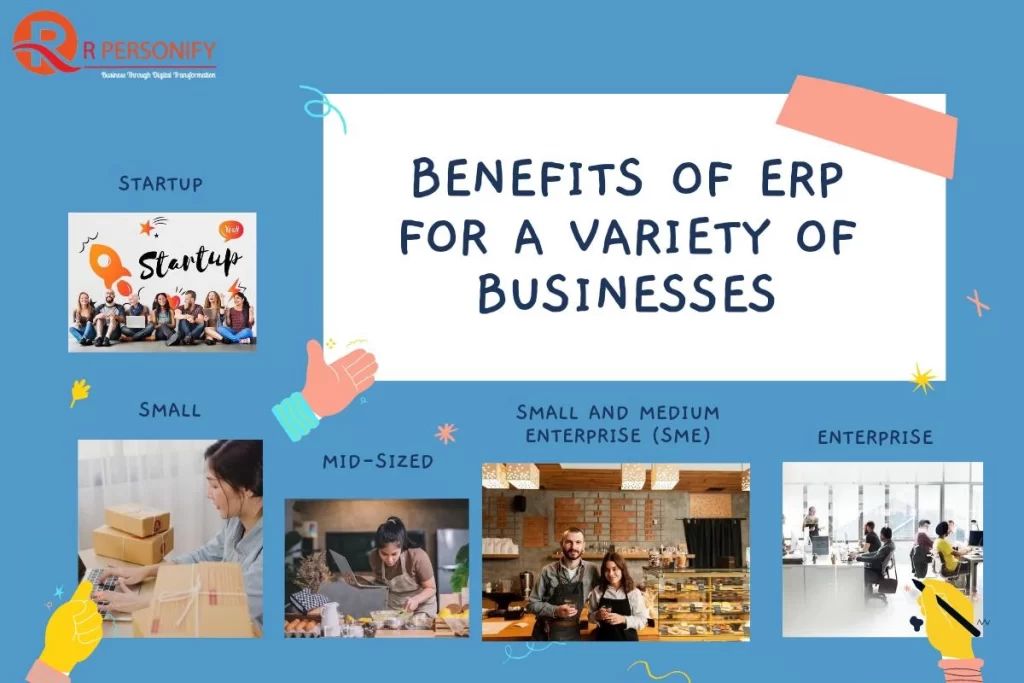
Benefits for various types of companies
Despite the fact that ERP starts with “enterprise,” it is not just a tool for large firms. All sizes of companies can use it and you can add workers, machinery, departments, and locations as you grow.
Startup
Typically, startups have five to ten employees or freelancers. Small businesses and home offices tend to have small facilities, with Excel or similar tools to manage business affairs and bookkeeping.
Small
Most of these businesses are mom-and-pop corner shops, which usually specialize in a certain type or amount of product (i.e., pharmacies, fishing stores, convenience stores, etc.). Keeping track of finances and doing other business affairs is possible with small business accounting systems.
Mid-Sized
Think of a mid-sized company as an organization with roughly 50 to 100 employees. ERPs centralize workers, departments, tools, and more while growing if you’re looking to expand.
Small and Medium Enterprise (SME)
There is no one-size-fits-all approach when it comes to SMEs. There is actually a classification of SMEs based on their sizes and industry type. These businesses require accounting and other business solutions.
Enterprise
These companies employ between 1,000 and 10,000 people and have local, national, or global locations and partners. Examples are Walmart, Apple, and Microsoft.
What are Oracle’s Key Features?
Cloud-based software like Oracle Cloud has a wide range of benefits. Due to its name, ERP Cloud is designed to live in the cloud. It is known for its flexibility. But what are some other benefits?
Upgrades are not necessary
Cloud-based software automatically receives updates and new functionality. It only requires an internet connection. As a result, you avoid the potential expense of system upgrades in the future, so your system is always up to date.
LESS EXPENSIVE UP FRONT
If you opt for on-premise ERP software, you will need to invest in the equipment and personnel needed to operate the system. A subscription-based ERP Cloud is run over the internet, which reduces the initial implementation costs.
SCALEABLE
The ERP Cloud’s ability to grow with your business is one of its most prominent features. In order to drive digital transformation and profitability, any business can leverage ERP Cloud for automating processes, such as inventory management, or for reducing costs through streamlining and a lower total cost of ownership.
CURRENT SECURITY MODELS
Many companies opt for cloud-based ERP platforms to secure their data. In addition, ERP Cloud keeps your system up-to-date with the latest security measures with its automatic deployment of updates. Further, cloud data storage offers an economic benefit as well – it can be outsourced to a larger and more secure third party, eliminating hardware maintenance costs.
MODERN USER EXPERIENCE
The use of ERP for business purposes is now widely accepted, but it was not always so. Despite the improvements in acceptance, businesses are still on the road to digital transformation. ERP Cloud has mobility features that keep workers connected throughout the day
The ability to make informed decisions and personalize the customer and employee experiences is enabled by real-time analytics that are connected but agile.
THIRD-PARTY INTEGRATION
Despite ERP Cloud’s comprehensive software suite, your business may require more to maximize the benefits of your ERP system. Third-party solutions can be integrated with your system.
BETTER BUSINESS PROCESSES
Oracle ERP Cloud is an industry leader, named as one of the most powerful ERP solutions. As ERP Cloud simplifies IT systems and enables the addition of security and new features faster, business leaders are more and more relying on it.
Oracle’s Approach to Enterprise Resource Planning on the Cloud
In addition to the AI features, Oracle Fusion Cloud ERP offers analytics to make real-time adjustments to market shifts, and automatic updates to stay current and gain a competitive advantage.
A cloud-based ERP solution from Oracle is the ERP of tomorrow, today. A cloud-based ERP solution from Oracle is the ERP of tomorrow, today. This modern user interface is easy to use and provides state-of-the-art data security. With rapid growth, the company has become a market leader, particularly among growing companies in professional services, financial services, healthcare, and higher education.
Oracle ERP Cloud typically has lower initial and ongoing costs than comparable on-premise solutions, while delivering capabilities and functionality that benefit businesses. Through streamlined and automated processes, Oracle ERP Cloud helped customers transform their businesses through greater visibility over the organization. Compared to on-premise systems, Oracle ERP Cloud requires less hardware, and IT management personnel enables faster deployments, and smoother upgrades, and requires less maintenance.
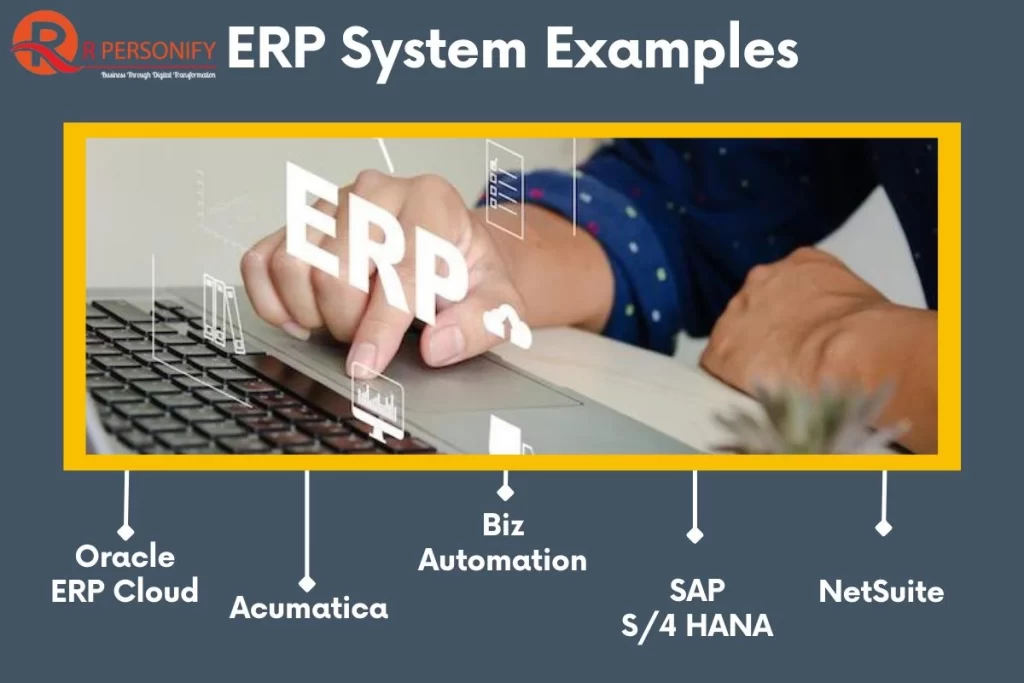
ERP System Examples
These ERP systems can help you automate your company’s processes.
Oracle ERP Cloud
Acumatica
BizAutomation
SAP S/4 HANA
NetSuite
Latest Announcement from Oracle- The First A.I. Enabled ERP Cloud Solution!
The Oracle Cloud ERP and EPM applications now include artificial intelligence capabilities. Machine learning-based innovations include automatic expense reporting, a virtual assistant for project management, advanced financial controls, and supply chain management driven by projects.
“Oracle continues to deliver on the finance innovation promise expected by our customers,” said Rondy Ng, senior vice president, of Oracle Applications Development. “Our pervasive AI strategy delivered via continuous product updates ensures rapid adoption with immediate business results. This allows finance and operations teams to stay ahead of the technology curve and retain a competitive advantage.”
The Oracle ERP Cloud has been selected by more than 6,000 organizations in 112 countries and 23 industries for its complete, innovative, and secure features. Embrace new technologies like artificial intelligence, digital assistants, natural language processing, blockchains, and the Internet of Things with Oracle ERP Cloud to boost productivity, reduce costs, and improve control for organizations of all sizes.
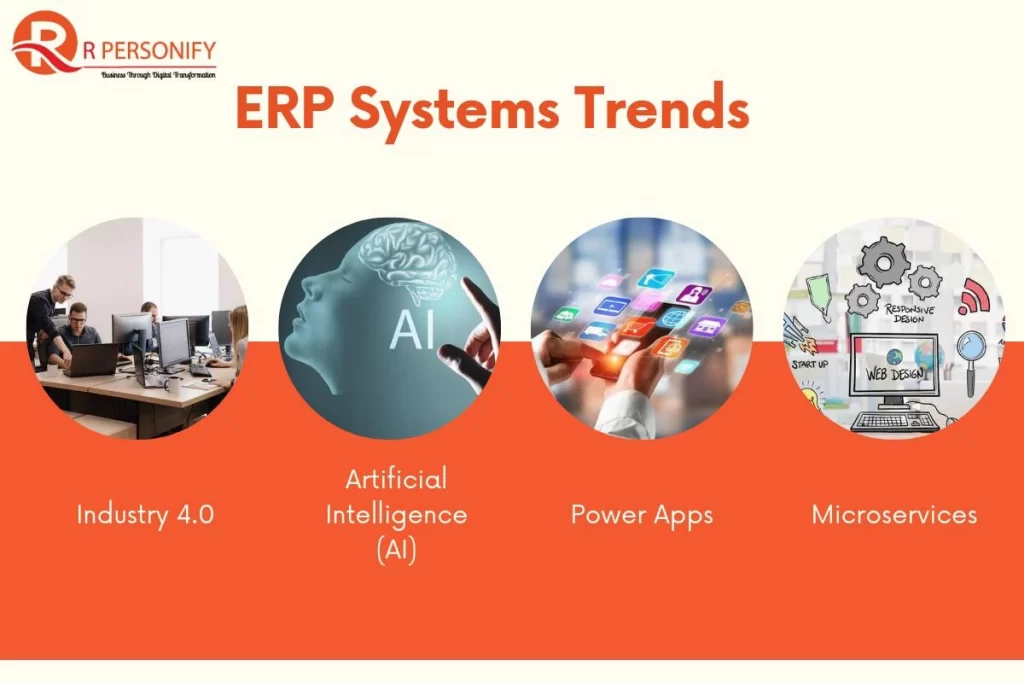
Enterprise Resource Planning (ERP) Systems Trends
A company’s ERP software system is often one of the major investments it will make. Before deciding which solution to implement, research existing options and future ERP trends.
Industry 4.0
Intelligent technologies such as the internet of things (IoT), virtual reality, and augmented reality can be used to achieve digital transformation in manufacturing. In addition to ERP not managing these technologies, the ERP system must exchange data with both hardware (sensors and fixed assets) and software (IoT management and digital twins).
Artificial intelligence (AI)
AI has multiple applications that can improve ERP efficiency. AI analyzes large amounts of complex data, identifies trends, and makes recommendations to improve business processes. Automating processing with robotics (RPA) allows users to create bots that can perform basic tasks rapidly and efficiently. Several ERP vendors use conversational user interfaces, in which users can ask questions or instruct computers to perform simple tasks such as sending emails or printing invoices by sending a message.
Power Apps
Power Apps is a suite of mobile apps, data services, and platforms that enables rapid app development for your business. Today, PowerApps are a big trend in organizations. Most people are using or looking for a power app. They can be incredibly useful to organizations. Using them improves efficiency, and communication, and keeps an organization up-to-date with the latest trends. Companies can use apps to perform their daily tasks in a way that is more user-friendly and efficient. Additionally, PowerApps can help an organization gain more exposure.
Microservices
In order to provide more flexible solutions, vendors have been increasingly using this kind of software architecture. With microservices, buyers can combine software modules from several different products, rather than using monolithic ERP. In addition, manufacturers who handle their distribution and sell online will benefit from custom solutions that include features normally sold separately.
Why ERP Cloud is the Future of Business Technology?
When you think about the future of your business, the ERP system must also always be innovative. Analytics provide insights into your operations, but real-time information gives you a clear picture of them. Collaboration is facilitated by information sharing and connectivity, making it easier for employees and departments to understand business data.
Meanwhile, enterprise technology is evolving to meet our needs as technology improves our lives. Here are some ways ERP Cloud is embracing new capabilities:
Cloud operation
The main advantage of ERP Cloud is that it is designed and deployed in the cloud. We’ve seen that cloud-based solutions have numerous advantages, including lower upfront costs, data security, and more. Enterprise cloud software is chosen for their business by eight out of ten CFOs.
Designed to support next-gen technology
ERP Cloud can not only scale with you, it can also adapt to changes in the business. A number of new tools are being hailed as the future of business, including machine learning, artificial intelligence (AI), and the Internet of Things (IoT). ERP is ideal for automating these processes.
Modern platform and design
A key factor in the effectiveness of ERP is the user experience. In other words, if a platform is easier to use and understand, then employees are more likely to effectively use it. Users of ERP Cloud can utilize personalized and automated features, such as Oracle Orchestration Cloud notifications, to free up their time and focus on more critical tasks.
Mobile
Mobile technology is no exception to the prevalence of ERP. The ability to access your business data anywhere has become a necessity for businesses. Real-time analytics and operations are also integral for businesses. Mobile-based capabilities are easy to implement and have become commonplace.
Conclusion
Using next-generation, cloud-based, and modern ERP solutions enables organizations to respond quickly to volatile markets and industry trends while reducing the cost of support.
Providing businesses with a powerful and flexible cloud software solution, Oracle ERP Cloud is part of the growing trend of cloud computing. Learn more about Oracle ERP Cloud applications at Top 5 features to optimize your business processes with the Oracle Business Suite blog. Contact us to find out how your business can take advantage of the future of the enterprise cloud.
SAP is a leading provider of software solutions for managing business processes, and facilitating information flow among organizations through effective data processing solutions.
“We are thrilled that SAP’s revenue has once again ranked us No. 1 ERP software vendor in Gartner’s Market Share Analysis report,” said Jan Gilg, SAP senior vice president and head of SAP S/4HANA Development. “As organizations continue to look for intelligent solutions to optimize and innovate business processes, we are committed to offering our customers a leading ERP system, which enables companies to address current challenges and future opportunities with flexibility, speed, and insight”
Here We find how SAP works..? What are some of the top SAP trends?
As a centralized system, ERP (Enterprise Resource Planning) is the company’s most prominent feature. The first version of SAP ERP was launched as a complete financial accounting system, known as SAP/R1. As a result of the design of SAP R/1, the one-tier architecture included three layers (Presentation, Application, and Database) in one system server.
Besides ERP software, SAP developed several complementary applications such as an enterprise data warehouse, a CRM (Customer Relationship Management), a supply chain management tool, etc.SAP expanded its portfolio even further with the acquisitions of Business Objects, Ariba, SuccessFactors, Hybris, and Concur in 2008.
It is always encouraging to learn about technology’s conception and how it is reshaping the digital world in such a way that it contributes to the growth of the industry. Additionally, it is also important to stay up-to-date with the current trends and technologies of the most beneficial skill, which helps you make the most of your competitive edge in the workplace.
Top Trends for Digital Transformation in SAP
Let me tell you how SAP helps businesses to achieve their goals with its smooth digital transition.
Among the technologies that can help organizations improve productivity are blockchain, artificial intelligence, the internet of things, cloud computing, and robotic process automation. ERP plays a crucial role in the integration of all these technologies into the organizational value chain, as well as serves as a platform for accelerating digital transformation. Let’s look at some SAP top trends that will take over the world in 2021 and beyond.
S/4 HANA
SAP with the Internet of Things
SAP with Blockchain
SAP FSM
SAP analytics cloud and big data
SAP Ariba
SAP Marketing cloud
SAP MM (Material Management)
Trend1. S/4 HANA
S/4 HAbegan its journey in 2015 with some difficulties. By the end of the first quarter of 2018, the usage had risen by 43 percent. The S/4 HANA comes in handy when the strategist is implementing or upgrading ERP. With this tool, information can be centralized in the cloud. This module is designed to help in solving complex administrative work when it comes to handling a large amount of data.
What is SAP HANA? The Complete Overview of What it is and How it Works
S/4 HANA is one of the latest trends with SAP and a modernized ERP system built on the SAP HANA in-memory database that makes it possible for companies to perform real-time transactions and analyze business data. By using this system, companies can respond to constantly changing business needs, customer demands, and environmental conditions more quickly, adaptable, and resiliently. The S/4HANA-centered business environment is called the intelligent enterprise by SAP.
The advantages of S/4HANA
The SAP S/4HANA solution enables companies to move up in the ERP game by combining a simplified data model, lean architecture, and a new user experience based on the SAP Fiori user interface. S/4HANA is also equipped with a wide range of advanced technologies, such as AI, machine learning, IoT, and advanced analytics. SAP HANA and the integrated technologies of S/4HANA make it possible for users to analyze more data faster than previous SAP ERP products thanks to their in-memory database design. S/4HANA, besides being available on-premises, is also available in public clouds or hybrid clouds. SAP S/4HANA Cloud, which differs from the on-premises version in terms of its modules and features, is also available.
Business lines supported by S/4HANA
S/4HANA started out as a series of modules, each with a distinct line of business functionality. Simple Finance was the first module and provided real-time financial data analysis and streamlined financial processes. As SAP Finance, it helped businesses align both financial and non-financial data into one source of truth. As a first step on the road to S/4HANA, Business Suite users typically implement SAP Finance.
After S/4HANA was introduced, SAP ECC ERP modules were reorganized into lines of business (LOB) that include functions for specific business processes. Initially, SAP S/4HANA Finance was the first LOB, and subsequent releases have added other LOBs.
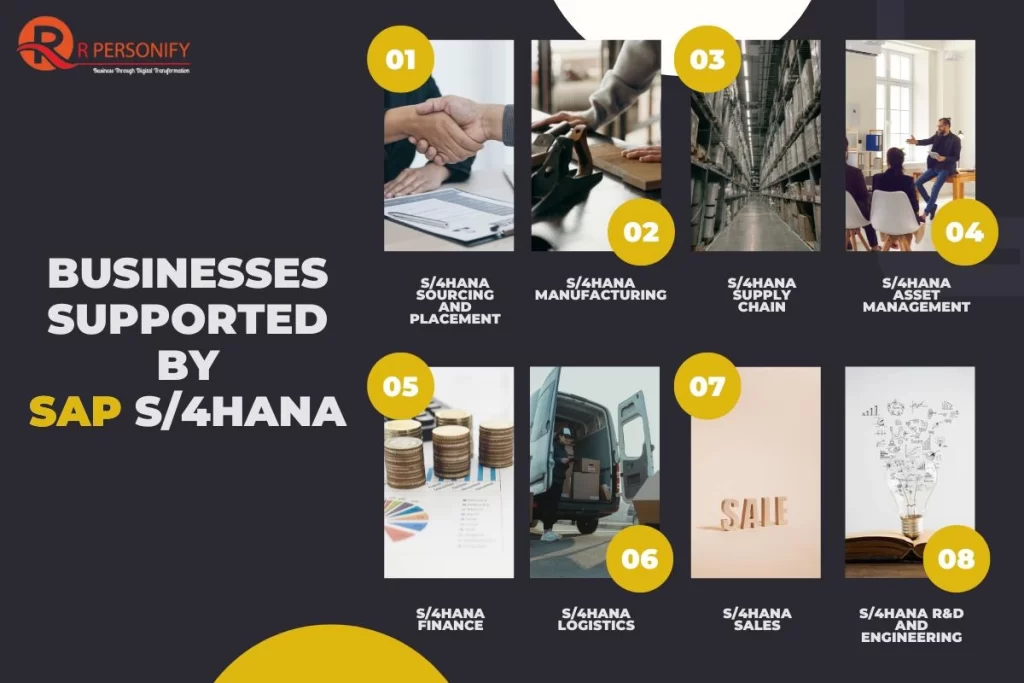
The following LOBs will be supported by S/4HANA in 2022:
S/4HANA Finance –
It provides comprehensive financial management, including financial accounting, controlling, treasury and risk management, financial planning, financial close, and consolidation.
S/4HANA Logistics –
There are several modules in S/4HANA Logistics related to suppliers and supply chains, including:
S/4HANA Sourcing and Placement, including elements such as procurement, operational purchasing, supplier management, and contract management of raw materials needed to fulfill orders
S/4HANA Manufacturing, concentrating on processes related to manufacturing products, such as making products faster, managing production, planning delivery schedules, and ensuring quality
S/4HANA Supply Chain, which provides complete logistics planning and manufacturing operations from pre-production through distribution, including production planning, batch traceability, warehouse management, inventory management, and transport planning; and
S/4HANA Asset Management, including maintenance and EHS monitoring for a company’s fixed assets, such as machines, plants, warehouses, and buildings.
S/4HANA Sales
Pricing, sales inquiries, quotes, promise checks, completion checks, repair orders, individual requirements, return authorizations, credit, and debit memo requests, picking and packing, billing, and revenue recognition are all managed by S/4HANA Sales.
S/4HANA R&D and Engineering
R&D and Engineering in SAP S/4HANA cover the entire product lifecycle, including the definition of the product structure, Bill of Materials, project planning, portfolio management, innovation management, chemicals management, and compliance with health and safety regulations.
Further industry-specific capabilities were added to the digital core LOB later. Consumer industries were the largest sector in 2022, followed by Discrete Industries, Energy and Natural Resources, Financial Services, Public Service, and Service Industries.
The S/4HANA releases have added new functional capabilities as well as integration with SAP cloud products (SAP Ariba, SuccessFactors, Fieldglass, and Concur) and other enterprise systems; and an expanded architecture that incorporates emerging technologies, including AI, machine learning, IoT, advanced analytics, and blockchain in more functional modules.
Trend2. SAP with the Internet of Things
IoT improves customer experience dramatically, and it is evident, especially in the retail sector. By allowing customers to interact directly with products, usually in an augmented reality or virtual reality environment, technology enhances the shopping experience. The Internet of Things allows devices to connect to the internet. The SAP implementation can enhance businesses’ security, help them better understand data, analyze market data, and much more through IoT. You can integrate SAP with other applications to create predictive analytics, behavior maps, and others. SAP Connected Goods is SAP’s best example of the Internet of Things.
Trend3. SAP with Blockchain
In addition to SAP with the Internet of Things, SAP with Blockchain is available. Businesses would need a secure platform for storing, transferring, and accessing the information collected by the Internet of Things. SAP and BlockChain are capable of creating a secure environment for information, while at the same time providing stakeholder transparency.
There are a few examples of blockchain in supply chain management, but there are a growing number of them being investigated, including:
Supply chain finance
Recently, blockchain and supply chain finance have attracted a lot of interest because they can provide more transparency and security and improve invoice processing efficiency.
Supply chain logistics
The high number of go-betweens and back-and-forth between partners causes a lot of friction in modern supply chains. Therefore, suppliers, providers, and customers interact through third parties rather than directly. According to DHL, blockchain promises to simplify global supply chains by allowing transactions to be recorded, verified, and coordinated independently without third parties.
Supplier payments
American Express says: “Blockchain technology promises to facilitate fast, secure, low-cost international payment processing services (and other transactions) through the use of encrypted distributed ledgers that provide trusted real-time verification of transactions without the need for intermediaries such as correspondent banks and clearing houses”.
Cold chain traceability
Storage and shipping of pharmaceutical and food products are often similar. IoT sensors on products coupled with blockchain technology can record temperature, humidity, vibration, and other environmental metrics. Whenever a reading is out of range, smart contracts are used to ensure automatic redress.
Food safety
Cross-contamination is a difficult issue to track and isolate when it comes to food safety. As a result of the lack of data and visibility in the supply chain, it is difficult to address issues quickly and reduce unnecessary waste and the cost of recalls. Blockchain is being used by a consortium to ensure all product movement and status are transparent within the supply chain.
Trend4. SAP FSM
This tool makes it possible for companies to handle their complete service process on one platform. Services are delivered by taking requests from customers. It allows a company to automate many functions of service management, and extract useful information that can be used to make decisions. SAP FSM can also be integrated with the Internet of Things, reducing numerous real-time mundane tasks. It is trending today, to integrate SAP FSM into an assembly platform for easy delegation and dividing operations.
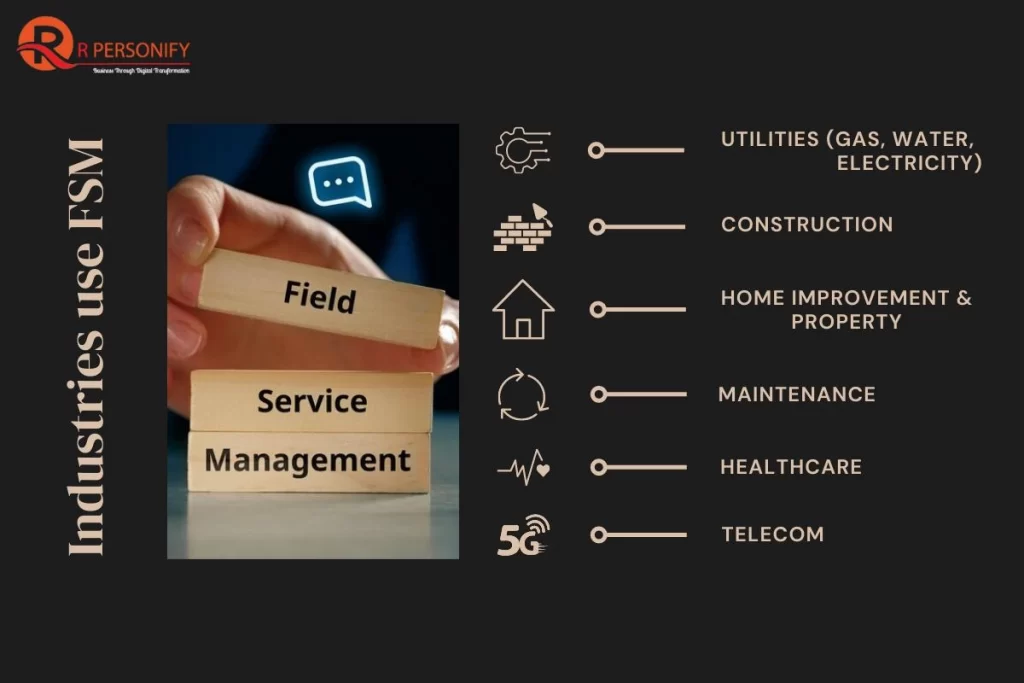
Any industry with employees in the field could benefit from field service management. Implementing field service management software is most beneficial to the utilities, healthcare, construction, home improvement, property maintenance, and telecom industries.
Some of the most common industries that use FSM include:
Utilities (gas, water, electricity)
Healthcare
Construction
Home Improvement & Property Maintenance
Telecom
The following tasks might be performed by a field service manager for a company selling home healthcare devices:
Planning and scheduling sales presentations and meetings
Setting up and inspecting equipment with the assistance of technical specialists
Keeping track of employee progress
Trend5. SAP analytics cloud and big data
There is nothing new about big data. Cyberspace information is being used by companies to make the best of their decision-making strategies by utilizing data collected there. Making AI-based data analysis easier and creating insightful information for an organization’s wellness is possible with the SAP analytics cloud.
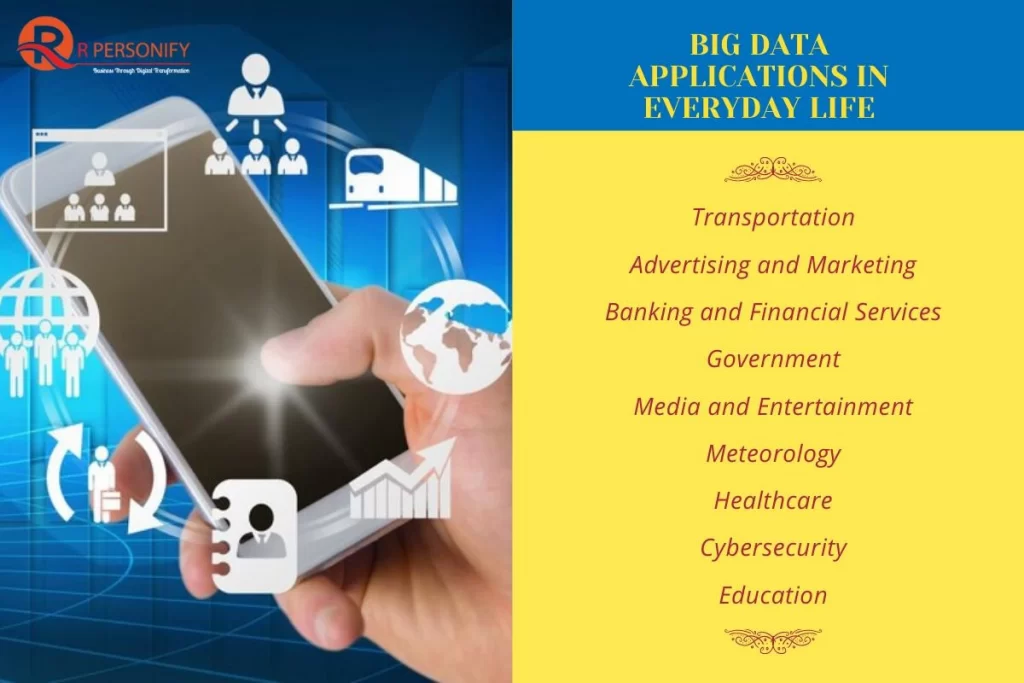
These are some examples of everyday applications of Big Data.
Transportation
Advertising and Marketing
Banking and Financial Services
Government
Media and Entertainment
Meteorology
Healthcare
Cybersecurity
Education
Trend6. SAP Ariba
In 2012, SAP acquired Ariba, “vendor management” technology. Ariba focuses on streamlining contract and vendor management, whereas it previously did not make quite a splash. Ariba is known for its simplicity and network capabilities.
Cloud-based SAP Ariba connects buyers and sellers on a single platform so they can do business together. In addition to providing less cost-effective ways to procure, it simplifies business procedures and makes it easier for an organization to manage its vendors.
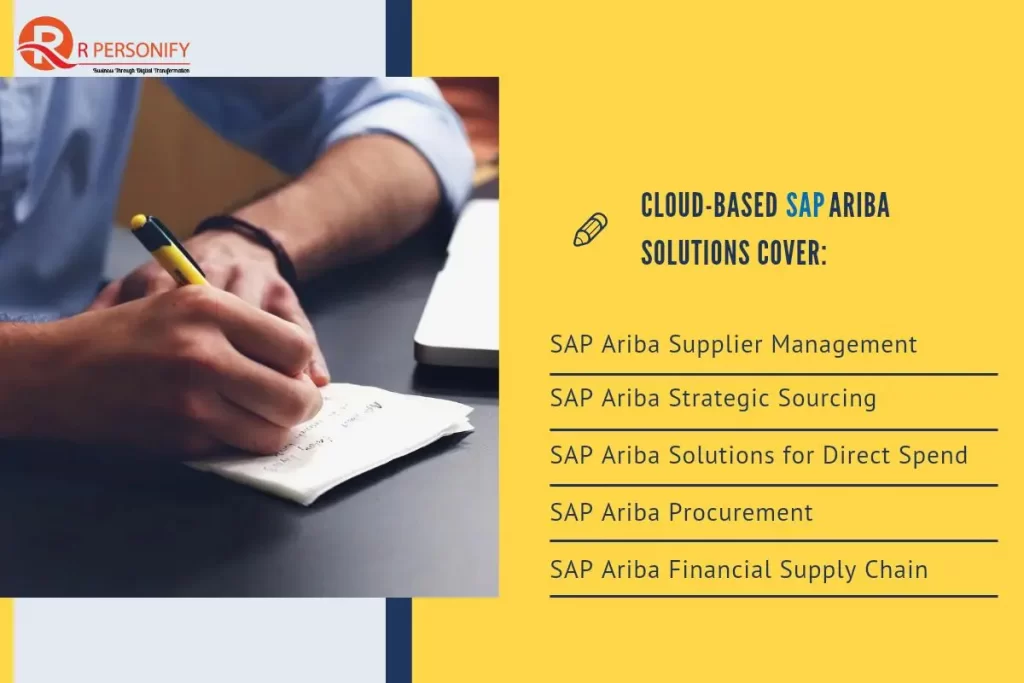
Following are the solution areas covered by SAP Ariba’s cloud solution: −
SAP Ariba Supplier Management − This system manages supplier information, lifecycle, performance, and risk all in one place, and from anywhere in the world.
SAP Ariba Strategic Sourcing − Manages all types of spend – direct materials, indirect materials, and service spend – for sourcing, contract negotiation, and spend analysis.
SAP Ariba Solutions for Direct Spend − Manages all design-to-deliver activities by connecting people, processes, and information.
SAP Ariba Procurement − Reduces costs and risks while improving compliance, visibility, and control.
SAP Ariba Financial Supply Chain − Enables companies to close the source-to-settle circle by improving cash flow, releasing working capital, and enhancing overall profitability
Trend7. SAP Marketing cloud
SAP introduced several new innovations in the Marketing Cloud technology early in 2019. . Using SAP Marketing Cloud, multiple campaigns can be managed simultaneously. The top management can create better campaigns by automatically analyzing and comparing data from many marketing events. By supplying detailed customer information in real-time, the SAP Marketing Cloud helps you to get to know your customers better and personalize your approach across all channels. This will result in a higher conversion rate and enhanced customer retention.
SAP Marketing Cloud (formerly Hybris Marketing) unifies user data into a centralized hub so that brands can deliver contextual, consistent, relevant experiences to all customers, regardless of the channel or device they use.
Data Management: Views people interacting with your brand from a 360-degree view, so you can target them in the right context, in real-time.
Recommendation: Provides customer recommendations that are timely and relevant, converting interest into conversion.
Segmentation: This allows you to create customized campaigns across multiple channels using high-performing audience segmentation.
Trend8. SAP MM (Material Management) is an SAP ERP component that manages materials, inventory, and warehouses in the supply chain process. This function is part of SAP ECC’s logistics functions, which consists of several components. Master Data, Purchasing, and Inventory are the three most popular and widely used components. Using this module, data associated with inventory procurement, planning, and control can be managed.
Features of SAP MM
It can manage both materials and inventories.
Maintains a continuous supply of materials in the supply chain.
Enhances the efficiency of material management and procurement.
Business environments are continually changing, and it helps to increase productivity and cut costs.
The software helps organizations manage various business aspects such as procurement, inventory management, invoice verification, and material requirement planning.
The Future Trend for SAP- The Integration with AI
New technology options include products and services. Installation, application, maintenance, and improvement processes are continuously being improved to simplify their use. In addition, it is important to develop skills in the current trends and technologies that are in demand around the globe. This helps to stand out from the crowd in global competition.
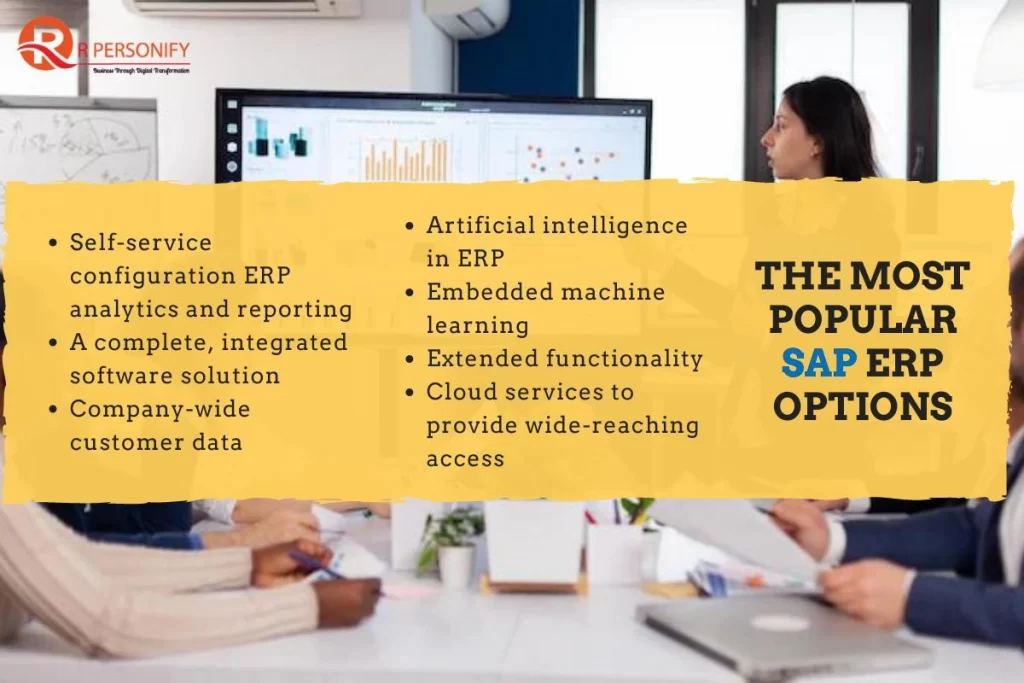
The following are some of the most popular options available in today’s SAP ERP systems:
What is enterprise resource planning (ERP) software?
Enterprise resource planning software brings together day-to-day data from many departments, allowing for a unified view of the company. A business management system combines key metrics and detailed information, including finance, human resources, operations, manufacturing, and sales. System ERP centralizes data, reduces manual entry, and makes business data visible to teams and key stakeholders.
Self-service configuration: A self-service configuration for PCs, tablets, and phones provides an enhanced user experience while maintaining high security and privacy. For self-service and advanced business processes, dashboards, workflows, business rules, and alerts can all be customized.
ERP analytics and reporting: Take action with access to your data, reports, and analytics. A modern database, dashboard, or KPI runs in memory on the cloud instead of an old server. Their single source provides accurate, real-time business information, as well as integrated document management for reviewing the information contained in contracts, specifications, purchase orders, invoices, and other business documents. Having these capabilities is critical to a growing business.
A complete, integrated software solution: ERP systems integrate multiple functions, such as customer relationship management (CRM), e-commerce, operations, supply chain management, manufacturing, field service, and accounting, so you don’t have to run separate software packages for each department. A lack of integration causes islands of isolation, which hinder productivity and impact the bottom line.
Company-wide customer data: Providing access to company-wide data will improve customer service. The latest technologies not only capture transactions but also show how your customers interact with your team as a whole. We evaluate your competitive performance and profitability by combining sales, quotes, pricing, customer portals, order fulfillment, field service, and costs.
Artificial intelligence in ERP: Productivity can be increased using artificial intelligence (AI). Business information can help you shorten lead times and reduce costs by providing insight into your business processes. Those insights can be used to create expert systems, for example, to identify malfunctioning equipment and troubleshoot it.
Embedded machine learning:
Automate workflows through machine learning. As your data is processed, computers are able to “learn,” making it easier for them to automate core functions, like determining where to post accounting transactions.
Extended functionality:
Furthermore, modern ERP systems are able to integrate with other technologies to provide alerts and facilitate better decision-making. For example, IoT integration involves sending and receiving critical information across equipment, vehicles, and ERP systems.
Cloud services to provide wide-reaching access: Businesses need access to their business systems that is fast, secure, and private. With cloud services, you can meet that need in any country, as well as provide your team with access from any mobile device, such as a phone or tablet, anytime, anywhere. Moreover, ERP cloud technologies are easy to integrate with other cloud applications, such as those that calculate sales taxes during sales order processing.
Conclusion
SAP will soon be dominated by these trends… The trends we have outlined will boost business efficiency and speed, and they will also lead to innovations in the fight against this pandemic.
It is my goal to provide readers with a functional perspective on RISE and SAP’s various layers. Please feel free to include your questions or feedback in the comments section.




Recent Comments