In every organization, human resources management plays a very important role. It is human resources management that facilitates the recruitment and retention of employees, improves and enhances the organization, and maintains an accepting workplace culture.
What is HR software?
An HR solution is a set of tools that automate the management of human resources. It’s easier to manage employees throughout their careers with these tools, which streamline tedious but essential HR processes. In HR software, companies manage a variety of HR processes, such as recruiting, onboarding, training, payroll, benefits, time and attendance, and performance management.
In the past, HR software focused on the administrative tasks of HR departments, but today’s products enable everyone to be involved in developing the organization’s people.
- human resource management system (HRMS)
- human resource information system (HRIS)
- human capital management (HCM)
How do HR management systems help your business?
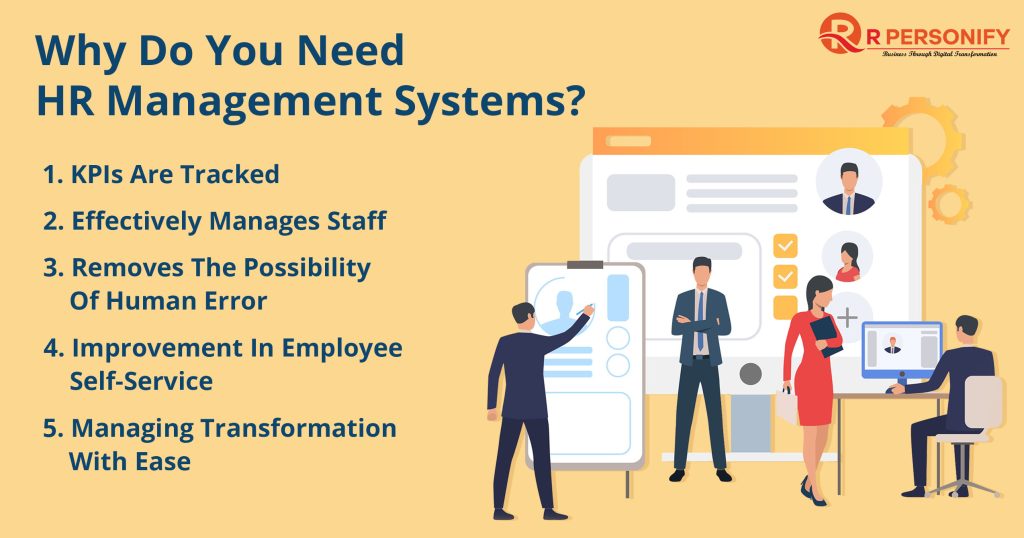
- KPIs are tracked
An organization’s Key Performance Indicator (KPI) measures how well employees are meeting their goals. An HRMS and payroll solution can help you measure only the most important metrics. An HRMS should track the following KPIs:
- Duration in the position
- Employee retention
- Absenteeism
- Time to achieve goals
- Effectively manages staff
By automating some procedures and reducing repetitive administrative tasks, a corporation can improve its overall efficiency. It is easy to collect data centrally, automate business processes, and view it through charts and graphs with most HRMS. HRMS and payroll solutions can help with personnel management and workflow by providing the following features:
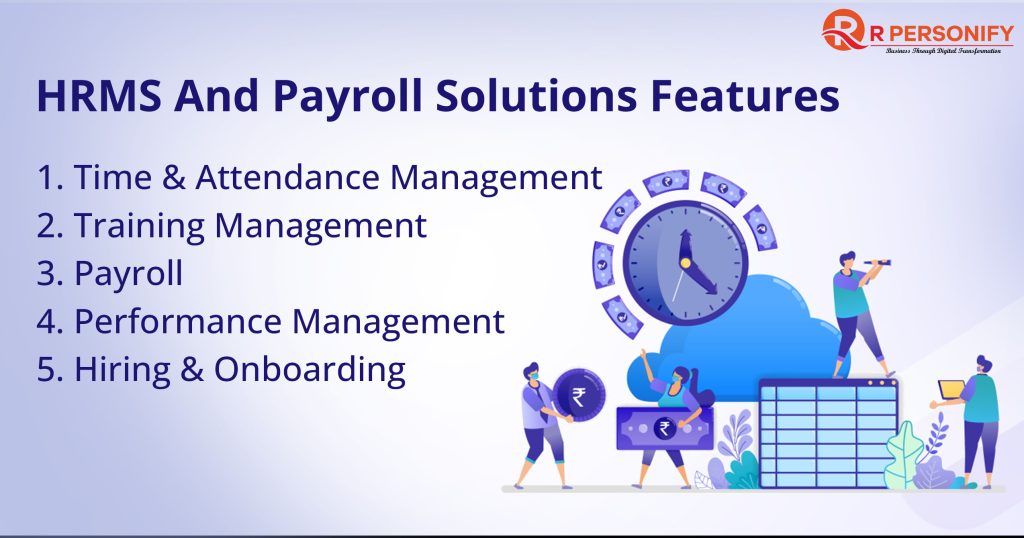
- Time & attendance management
- Training management
- Payroll
- Performance management
- Hiring and onboarding
- Removes the possibility of human error
Another major source of avoidable corporate costs is human error. By automating HR procedures, employees are able to double-check their work for typos and prevent common errors such as double entries.
- Improvement in employee self-service
Employee self-service is one of the most in-demand features of modern HRMS software. It is common for employees to ask about specific terms, conditions, pay, leave, and other matters. HR departments find it extremely challenging to answer each of these questions individually for hundreds of employees. An automated HR management solution improves employee self-service and satisfaction. Using HRMS, employees can check their available paid time off, paid sick leave, or ability to work remotely. The Human Resource Management System (HRMS) normally provides employees with access to all the information they need.
- Managing Transformation with ease
An organization must always be able to adapt to market changes. By enhancing communication with all team members, security job concerns can be eased at the time of change. HR solutions that include employee attendance management prove to be beneficial in this case. Using these systems, employees log in and out, work additional hours, and take leave. Each employee and manager learns about the performance of the other. Talent is a key factor in transformation success. Thus, the human resources of a company are under increasing pressure. Every business should implement an HR solution system because of this.
Here are eight components you should look for in a human resources management system
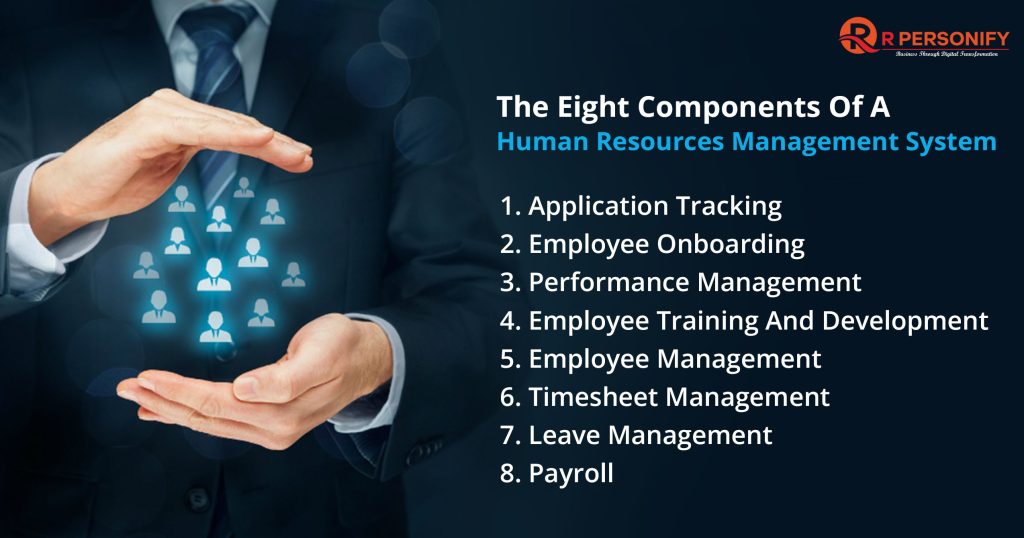
1. Application tracking
The applicant tracking system (ATS) facilitates the recruitment process and helps HR staff to close job openings more quickly. Using these applications, recruiters can sift through resumes, find suitable candidates, schedule interviews, and securely store resumes in the cloud. Whatever the size or budget of your business, web-based ATS SaaS Platforms are right for you.
2. Employee onboarding
Onboarding checklists are the most trusted tool in organizations. Checklists are useful, but they are time-consuming and prone to errors. Robust onboarding software, on the other hand, has a huge impact on a new hire’s readiness and performance. In addition to reducing employee turnover, a successful onboarding experience improves morale, increases engagement, and reduces time-to-productivity.
3. Performance management
In order to align employee interests with the organization’s mission, performance management systems play a crucial role. Performance management encompasses the process of setting goals, implementing them, reviewing them, evaluating them, and revising them. Businesses can gain a competitive edge in the market by employing a structured, constructive approach that makes employees happy, induces loyalty, and makes them feel valued.
4. Employee training and development
HR admins and supervisors can create and manage employee training programs quickly using training and development software. Businesses can easily determine employee training needs, implement a program, retrieve feedback, and analyze employee training effectiveness by using training and development software. As well as reducing trainer workloads, they provide management with a 360-degree view of training.
5. Employee management
Managing employees can be challenging, but employee management software helps businesses overcome these challenges. In addition to forecasting workload, scheduling shifts, allocating schedules to employees, and managing employee workload to keep them engaged and productive, these HR software options allow HR managers to handle everyday tasks. An organization can make informed decisions based on a comprehensive analysis of labor-related data maintained in a centralized database.
6. Timesheet management
The purpose of timesheet management software is to record, track, and monitor employee performance. Using timesheet software, organizations can measure productivity and calculate labor hours involved in completing a task by synchronizing the number of employees and their working hours. In addition to tracking and approving timesheets, recording working hours, retrieving leave details, and calculating salaries accurately, this tool can be used to establish a more efficient timesheet process.
7. Leave management
Organizations’ bottom lines are impacted by leave management. With partial visibility, it is difficult to prioritize leave requests and ensure that the workforce is available when needed. Using leave management software automates the process and provides transparency. Employees can apply for, track, and manage their days off using these software tools. This request can be viewed, approved, or rejected by managers and HR staff.
8. Payroll
Human error can be minimized by automating payroll processes and empowering HR staff. Human resources will only need to spend a few hours computing what previously took 3-14 days. Using automated payroll systems enhances payroll accuracy, enhances security, and automates complex calculations.
How to Choose the Right HR Solution for Your Business Needs?
It takes time and effort to choose the right HR management software, but the results are worth it. In order to be effective, HR software solutions need to come with a variety of flexible yet powerful HR modules that are easy to use, implement, and manage. Finding the right HR software that fits your processes like a glove requires a clear understanding of your needs.
Still unsure about the best HR management software for businesses? Are you looking for a way to address the gaps in your HR process without having to break the bank? Choose a user-friendly HR solution like SAP HCM or Oracle Fusion Cloud HCM and customize it to fit your needs.
Functionality of Oracle
Described as a complete human resources management platform, Oracle Fusion Cloud Human Capital Management connects all human resource processes from hire to retirement. In terms of products and services, this means HR data management, talent management, recruitment, learning and development, workforce management, and payroll. Oracle has invested in its employee self-service capabilities, offering mobile-responsive and voice-enabled digital assistant interfaces for easy and flexible access to over 35 HR functions. As well as seamless integration with other Oracle business systems, including finance, customer experience, and supply chain management, Oracle’s HCM suite enables you to run your business more efficiently.
Functionality of SAP
SAP describes its SuccessFactors HXM suite as focusing on creating experiences that serve employees first.” This is why HXM (human experience management) is used rather than human capital management (HCM). It includes core HR and payroll functionality (standardized processes, live insights into data, and automated self-service support), talent management (automated hiring, customizable learning, and bespoke career paths), employee engagement, feedback, people analytics (including the strategic use of Big Data to make better decisions), and time and attendance management (using automated features to increase efficiency). SAP is used in a wide range of industries, including retail, professional services, the public sector, health care, consumer goods, utilities, and higher education.
Both systems provide a full range of HR-related services and support. SAP delivers global payroll in 41 countries, which makes it a good match for multinational organizations. As a result of the pandemic-driven disruption of the recruitment market, Oracle‘s talent and development capabilities are reputedly strong, which makes it attractive to any large-scale business trying to attract and retain talent. Both platforms offer a strong analytics capability to meet the needs of clients who are constantly looking at numbers.
Oracle HRMS vs SAP HCM
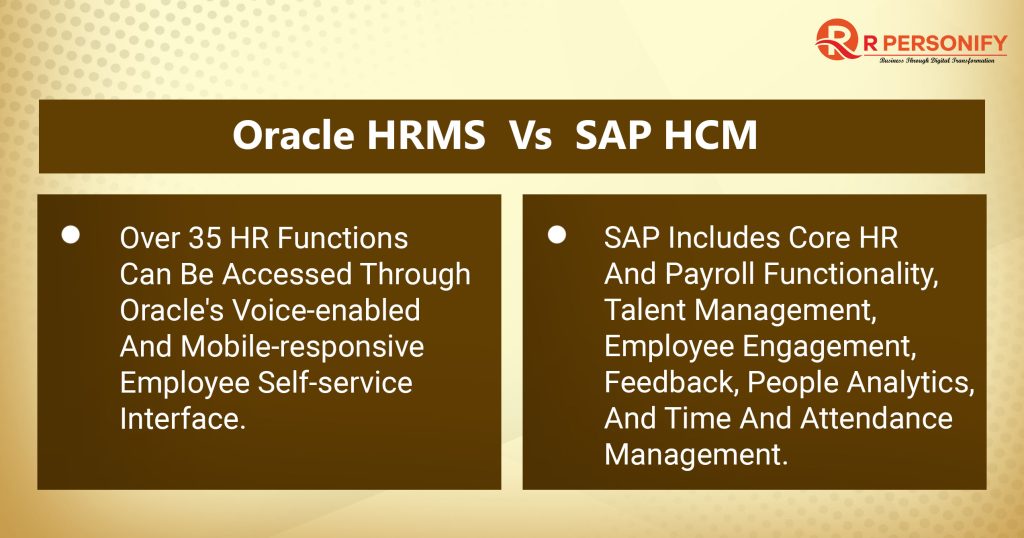
There are two leading vendors of HR systems: Oracle HRMS and SAP HCM. The two companies have decades of experience in business software and platforms, and between them, they serve thousands of customers. In addition to HR, both vendors offer a wide variety of other business modules, so you have a single provider for a variety of business needs
Final Say:
An organization’s human resources department has many responsibilities and keeps the organization running smoothly due to its many responsibilities. We live in a changing society, so HRM is changing as well. It is inevitable that organizations will continue to incorporate human resources specialties such as compensation and benefits managers, training specialists, and development specialists. A business’s success depends on many attributes of human resource management. The time to implement a human resource management department in your organization is now before it is too late.
R Personify will automate your HR processes from hire to retirement, create seamless integrations, and make real-time interactions in your siloed environment a reality. Become a member by signing up for a free trial!


Recent Comments