

We will explore a few of Azure’s features and how the platform can add real value to your business in this blog post.
In today’s digital economy, cloud computing is driving new businesses across all industries by providing IT infrastructure for new digital businesses.
Businesses have been revolutionized by these platforms and applications, and processes have been simplified.
In the cloud computing industry, there are a number of platforms available, but two platforms dominate the market. Amazon Web Services (AWS) and Microsoft Azure are the two giants in the world of cloud computing. While AWS is the largest cloud computing platform, Microsoft Azure is the fastest-growing and second-largest. This article focuses on Microsoft Azure and what is Azure—its services and uses
To understand Azure, you must first understand cloud computing.
What is Cloud Computing?

Cloud computing technology enables users to access a variety of computing resources over the Internet. You can connect through the internet to your cloud service provider using your computer or mobile device. As soon as you connect, you gain access to various computing resources, including serverless computing, virtual machines, and storage. It offers a number of benefits to people and businesses, including cost savings, increased productivity, speed and efficiency, performance, and security.
Read our other blog to know more about cloud computing and its benefits for business: https://rpersonify.com/why-should-every-business-have-cloud-solutions/
Azure History
The Windows Azure service was introduced in October 2008, but it went live only in February 2010. Microsoft changed its name from Windows Azure to Microsoft Azure in 2014. Azure provides a platform for .NET and SQL services, as well as many Live Services. “The cloud” was still very controversial among many people. It was a brave new world for our industry, with many possibilities. In the coming days, Microsoft Azure will continue to grow and improve. A growing number of tools and functionalities are being added. As of now, there are two releases. Microsoft Azure v1 was one of the earliest versions of Azure. It was followed by Microsoft Azure v2
What is Microsoft Azure and What Makes it the Cloud Solution of Choice for Future Ready Businesses?
What is Microsoft Azure?

Formerly known as Windows Azure, Microsoft Azure is a public cloud computing platform that provides a range of cloud services for computing, storing, and networking. Depending upon your requirements, you can manage and store data.
Microsoft Azure is a cloud computing platform that offers businesses the ability to create, deploy and manage applications and services through a global network of data centers. It provides a comprehensive set of integrated services, including analytics, storage, networking, database, computing, and identity. With Azure’s various cloud solutions, businesses can easily develop and deploy applications to meet their specific needs. Microsoft Azure is the ideal cloud solution for future-ready businesses that want to stay competitive in today’s digital economy. It enables businesses to quickly scale up or down their resources as needed while providing them with the flexibility they need to stay agile in an ever-changing market. Furthermore, its reliable security features ensure that customer data is kept safe at all times. It also provides access to a wide range of enterprise-grade tools, including AI-driven analytics and machine learning capabilities.
Why do we need Azure?
The Microsoft Azure platform can help solve today’s challenges and build a new future with realistic answers to everyday life’s problems. Azure provides the right tools and frameworks for building, managing, and running applications on multiple clouds, at the edge, or on-premises. Microsoft Azure’s adaptability is a crucial attribute for cloud service providers to consider when choosing a cloud provider. It applies to the healthcare, manufacturing, consumer appliances, travel, and aviation industries.
Microsoft Azure’s unique features and benefits
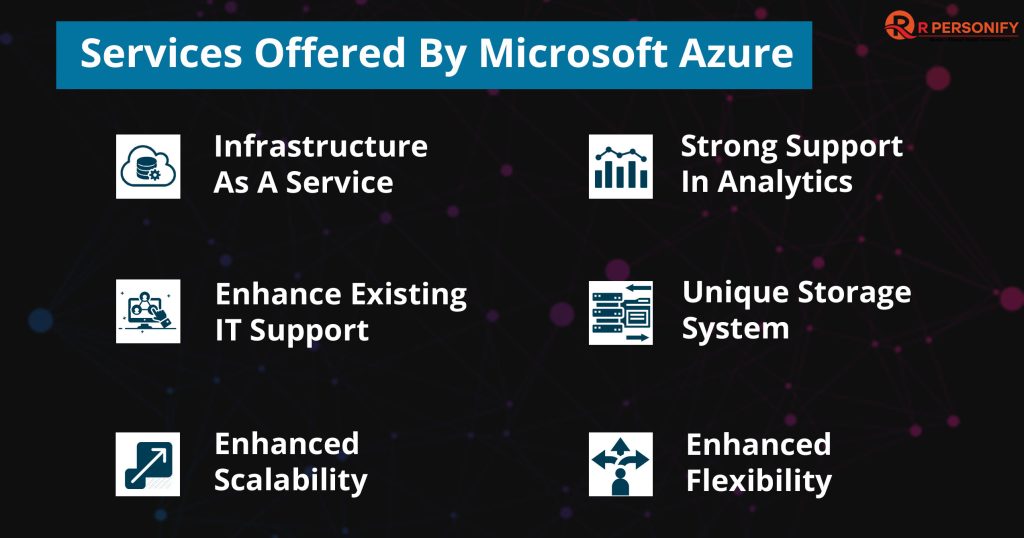
Infrastructure as a Service (IaaS)
In recent years, Microsoft Azure has driven the development of IaaS, allowing businesses to manage and deploy applications quicker and easier than ever before. Using Azure is an excellent way for organizations to customize their cloud software in order to meet their particular business needs.
Strong Support in Analytics
With Microsoft Azure, you have access to built-in analytics and insights that help you make informed decisions. This service includes Cortana Analytics, Stream Analytics, Machine Learning, and SQL services. Businesses will be able to discover new business opportunities, improve customer service, and make more informed decisions as a result of these features.
Enhance Existing IT Support
With Azure, IT departments can integrate seamlessly with their existing systems. Through hybrid databases, storage solutions, and secured private connections, this can be accomplished. You can use Microsoft Azure in your business environment and in harmony with your data center. Azure is one of the most cost-effective and easiest cloud services to use.
Unique storage system
The Azure cloud service has more delivery points and data centers than other cloud services. Azure can then deliver content faster to your business environment and ensure an optimal user experience. Data can be stored in an environment that is fast and reliable with Azure. Additionally, multiple virtual machines can be used to share content
Enhanced scalability
As a pay-as-you-go service, Microsoft Azure can be quickly adapted to your business needs and environment. It is therefore a convenient solution for many businesses with fluctuating sizes.
Enhanced flexibility
The flexibility of Azure enables your business to utilize any level of functionality required. In addition, it supports the same technologies most developers and IT professionals already use. Azure lets you deploy and change web apps quickly and with almost no downtime.
Exploring The Different Types of Microsoft Azure Services & Applications
Some following are the services Microsoft Azure offers:

Compute:
Provides Virtual Machines, Virtual Machine Scale Sets, Serverless Computing Functions, Batch for containerized batch workloads, Service Fabric for microservices and container orchestration, and Cloud Services for deploying cloud-based apps and APIs.
Networking:
Azure offers a range of networking tools, including Virtual Networks that can connect to on-premise data centers; Load Balancing; Application Gateways; VPN Gateways; Azure DNS for domain hosting, Content Delivery Networks, Traffic Managers, ExpressRoute fiber connections, and Network Watcher monitoring and diagnostics.
Storage:
A variety of storage services are included, including Blob, Queue, and File storage, as well as Backup and Site Recovery services.
Web + Mobile:
The web and mobile application development process is very easy since several services are included for building and deploying applications.
Containers:
Azure’s Container Service includes Kubernetes, DC/OS, or Docker Swarm, as well as tools for microservice deployments.
Databases:
A number of SQL-based databases and tools are also included in Azure.
Data + Analytics:
Azure offers some big data tools, such as HDInsight for Hadoop Spark, R Server, HBase, and Storm
AI + Cognitive Services:
Azure helps developers develop applications that integrate artificial intelligence, such as the Computer Vision API, Face API, Bing Web Search, Video Indexer, and Language Understanding Intelligent.
Internet of Things:
A variety of machine learning, analytics, and communications services can be combined with IoT Hub and IoT Edge services.
Security + Identity:
This product includes Security Center, Azure Active Directory, Key Vault, and Multi-Factor Authentication Services.
Developer Tools:
A variety of cloud development tools are available, such as Visual Studio Team Services, Azure DevTest Labs, HockeyApp for mobile app deployment and monitoring, and Xamarin for cross-platform mobile design
The Future of Cloud Computing with Microsoft Azure
Azure has become the cloud computing backbone used by a worldwide network of partners by connecting every computing, mobile, and smart device. In addition to supporting the digital transformation of millions of companies, Azure includes Big Data, AI, Machine Learning, IoT, and Edge computing. The Microsoft Azure cloud platform is positioning itself to be at the center of the next wave of AI-powered innovations. Through development, investments, and incentives, it is working to increase Azure usage among its partners.
Azure provides physical, infrastructure, and operational security. A billion dollars are invested by Microsoft every year into security, including the Azure platform’s security, to provide the utmost protection for the data of their clients. In addition to offering cloud storage, Microsoft Azure cloud services provide seamlessness in multiple situations and offer more features than most clouds. This will improve the company’s growth, stability, and business fluency, and the best part is that Microsoft Azure is perfect for any size of business.
Conclusion: Unlock the Power of Microsoft Azure and Embrace a Future
Using Microsoft Azure, businesses can increase their scalability, improve their security, and reduce their costs while offering innovative products to their customers. A business can leverage Microsoft Azure’s wide range of features and capabilities to embrace a future where technology will drive success.
If you are considering shifting to cloud computing, Microsoft Azure will be a great solution and a good investment for the future. By leveraging Microsoft Azure, your company can excel and be future-ready to meet upcoming market demands. With its Cloud Platform Services, R Personify helps companies evaluate their cloud strategy, including migration of legacy workloads to Azure. Contact us for more information and expert guidance.
Read other R Personify Blog posts here! https://rpersonify.com/r-personify-blogs/



Recent Comments